
Direct answer
A private label plus size compression sock project should begin with the target wearer and size chart, not with a logo. Buyers need to confirm calf and ankle ranges, compression positioning, yarn and construction, colors, packaging, testing and bulk inspection before approving production. This checklist gives sourcing teams a practical order for those decisions.
1. Define the wearer, channel and product type
Choose a focused starting product such as a wide calf knee-high sock, an extra wide daily support style, an open toe option, a zipper sock or a travel compression sock. The same product should not be expected to serve every user and every channel. A pharmacy buyer may prioritize neutral colors and easy size selection, while a nurse uniform retailer may need durable patterns and all-shift comfort. An online private label brand may place more weight on clear size charts, pack configuration and return reduction.
Before requesting a quotation, describe the target market, expected retail price, main wearing situation and first-order quantity. This helps the manufacturer recommend an appropriate construction instead of quoting a generic standard sock.
2. Build the size chart around leg measurements
Foot size alone is not enough for plus size compression socks. The technical brief should include foot length or shoe-size conversion, ankle circumference, calf circumference and heel-to-knee length. Buyers developing an extra wide range should also define where the calf is measured and whether the published range represents body measurements or finished garment measurements.
Keep the number of sizes manageable for the first launch, but do not combine ranges so broadly that one size must stretch far beyond its intended fit. Review our calf measurement guide and size grading guide before confirming labels and packaging.
3. Confirm compression level and claim language
State the intended compression range, test method and tolerance during development. The target should be checked on the correct leg form or measuring equipment across the size range, rather than assumed from a standard-size construction. Larger circumferences can change how yarn tension and graduated support perform.
Packaging claims must match the product and destination market. Use support, comfort, travel or workwear language carefully, and avoid unsupported treatment or prevention claims. Buyers should review local medical-device, textile-labeling and advertising requirements before printing retail packaging.
4. Select yarn and construction for the use case
Regular nylon and spandex constructions provide a clean appearance, durability and controlled elasticity. Bamboo-blend programs can support a softer, breathable positioning, while lighter structures may suit summer or travel assortments. Material choice should be evaluated together with thickness, opacity, recovery and wash performance.
Specify toe style, toe seam, heel reinforcement, top-band width and whether easier-on construction is required. For large calves, cuff comfort is especially important: the band must hold the sock without digging in, folding or rolling down. The material comfort guide provides a useful comparison for sample planning.
5. Prepare the private label artwork package
Send vector logo files, Pantone or physical color references, pattern artwork, size-label content and logo placement instructions. Decide whether branding will be knitted into the sock, printed on packaging, applied to a label or used in several locations. Small artwork can change after stretching, so patterned and knitted-logo samples should be reviewed on the target calf size.
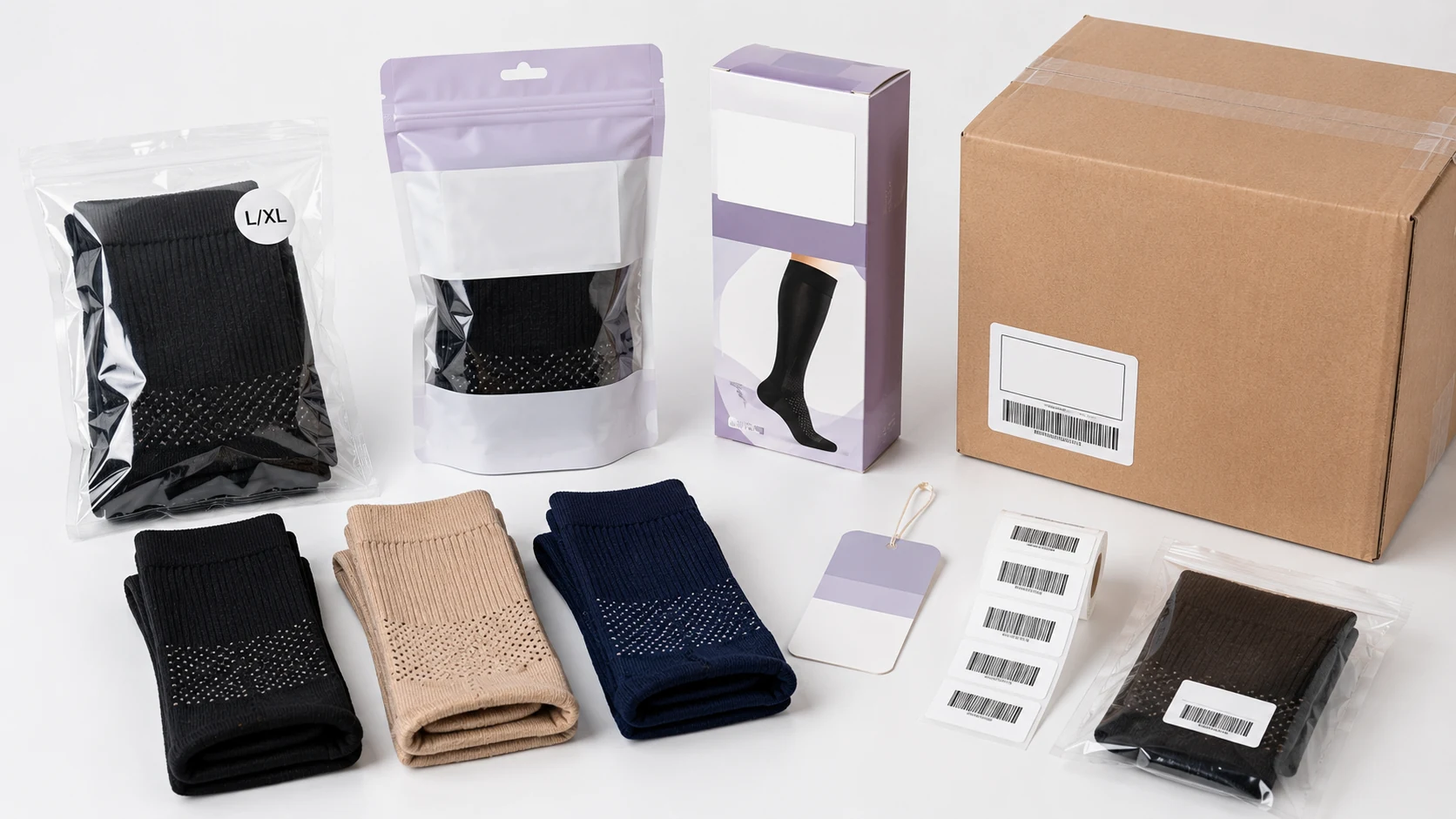
Packaging files should include product name, size range, compression information, fiber content, care instructions, country of origin, barcode and any required importer details. Also confirm individual bag, retail pouch or box dimensions, master-carton quantity and carton marks. Amazon and other marketplace programs may need FBA labels or specific pack-out rules.
6. Approve a representative sample set
Do not approve only the smallest size or one color. Review at least the critical ends of the size range and any construction that changes by color, yarn or pattern. Fit testing should cover donning, cuff comfort, walking, sitting, standing and several hours of wear on users whose measurements match the proposed chart.
After wear testing, check wash shrinkage, stretch recovery, colorfastness, seam comfort, logo position and package fit. Record approved measurements and photographs so the bulk-production standard is clear. A written sample approval checklist reduces disagreements later.
7. Define bulk quality control before the order
The purchase specification should state measurement points, tolerances, appearance standards, compression-test expectations, size and color assortment, packaging sequence and acceptable quality limits where applicable. Confirm whether inspection will occur during production, before shipment or at both stages.
Traceability also matters. Ask how yarn lots, production batches, rework and packed cartons are identified. For repeat orders, keep an approved reference sample and compare key measurements, shade, hand feel and packaging against that standard.
Information to include in the first OEM inquiry
- Target country, sales channel and wearer profile.
- Product style, toe construction and intended use.
- Foot, ankle, calf and leg-length ranges.
- Compression level and required test or label standard.
- Material, thickness, color and pattern direction.
- Logo method, packaging format and barcode requirements.
- Estimated quantity, sample deadline and target delivery date.
FAQ
Can one sample represent the complete 2XL-7XL range?
No. One sample can confirm the visual direction, but the smallest and largest sizes should be checked because calf stretch, sock length and cuff pressure can change across the range.
When should packaging artwork be finalized?
Finalize the structure and required text early, but lock final dimensions only after the product and fold method are approved. This prevents a finished sock from fitting poorly inside the retail package.
What causes the most expensive private label revisions?
Late size-chart changes, unsupported package claims, unclear color standards and artwork prepared before the sock construction is confirmed are common causes. A complete technical brief and controlled sample approval process reduce these risks.