
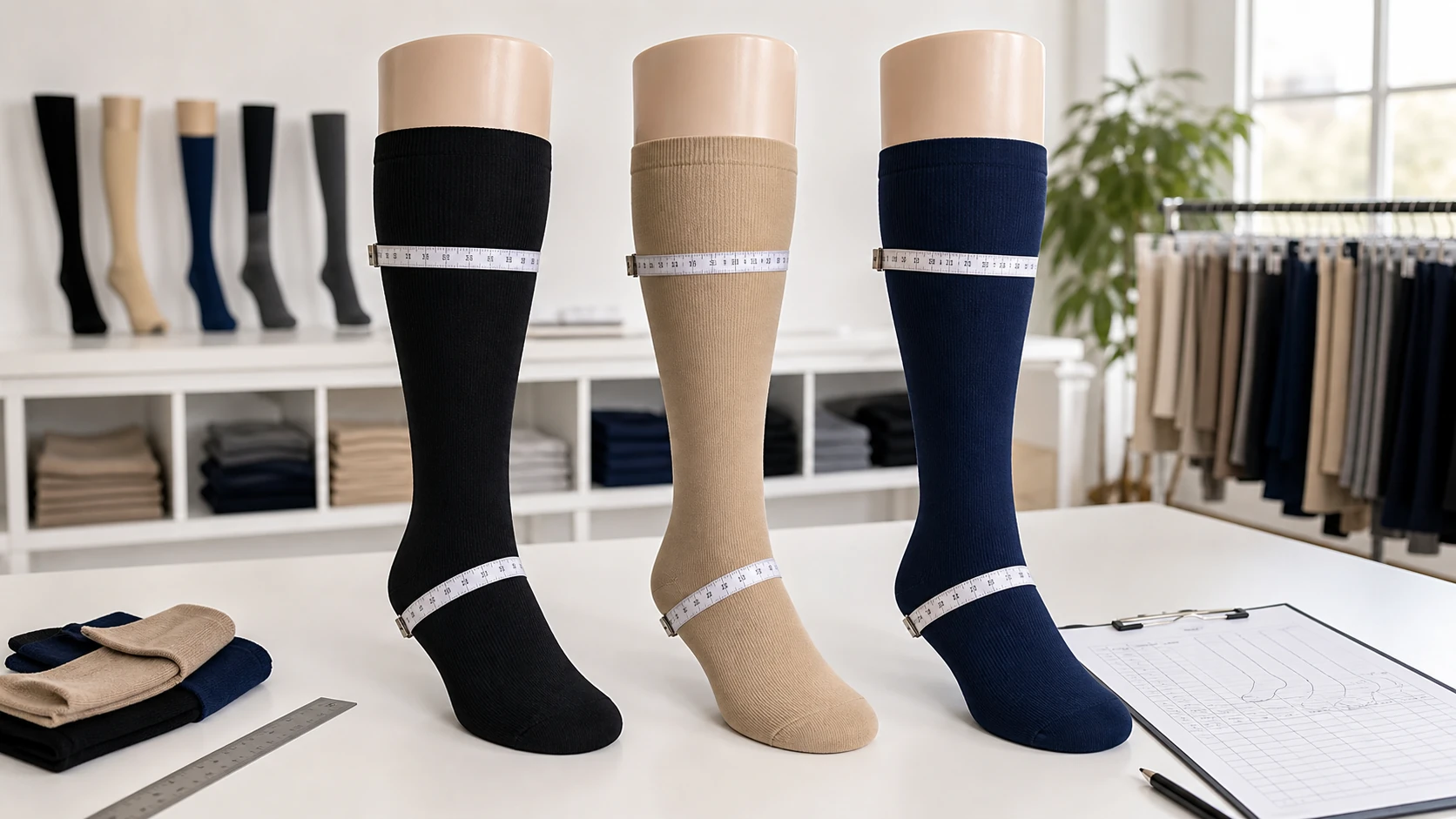
Plus size compression sock grading is a three-dimensional problem. A larger calf does not always come with a proportionally larger ankle or foot, so simply enlarging every part of a standard pattern can produce loose heels, excess fabric and unstable compression.
A strong OEM program starts with a target body-measurement matrix. Buyers should define the ankle range, calf range, foot range and leg length for each size, then ask the factory how the knitting program changes between sizes.
What buyers should define before sampling
A complete brief gives the factory a measurable target and reduces revisions. Confirm these points before treating a sample as ready for approval:
- Target ankle circumference for every size.
- Minimum and maximum calf circumference for every size.
- Foot length or regional shoe-size conversion.
- Finished leg length and expected stretch in wear.
- Heel, toe and instep construction requirements.
- Acceptable overlap between adjacent sizes.
Why proportional enlargement does not work
If every dimension is enlarged by the same percentage, the ankle may become too loose while the calf remains tight. Compression socks depend on a controlled relationship between circumference, yarn tension and construction, so each zone should be graded according to the target body range.
Buyers should ask for finished measurements by zone and compare them with the intended wearer measurements. This reveals whether the factory has designed a true plus size structure or only stretched a standard style.
Plan useful overlap between sizes
Adjacent sizes need enough overlap to cover real customers, but not so much that two labels describe almost the same product. A clear grading plan gives shoppers a decision rule when their foot and calf measurements fall into different sizes.
For example, the size chart may instruct the customer to prioritize calf circumference and then confirm that the foot range remains suitable. This is more helpful than asking customers to guess between 3XL and 4XL.
Keep compression performance consistent
As calf dimensions grow, the sock must still deliver the intended compression profile without becoming excessively difficult to put on. Yarn selection, machine settings and pattern zoning may need to change across the range.
Approve performance by size, not only on a middle sample. The smallest and largest sizes often reveal grading problems that are invisible in the center of the range.
Sample approval checklist
Use the approved sample as a production reference, not only a sales photo. Record the results of the following checks and retain the final version:
- Review a complete measurement table before knitting samples.
- Fit-test at least the smallest and largest size.
- Check heel placement and excess fabric around the ankle.
- Compare donning difficulty across the size range.
- Confirm that top-band width changes appropriately by size.
- Document tolerances for ankle, calf, foot and length.
OEM and commercial planning
For online stores, name sizes in a way customers can understand and support them with body measurements. Labels such as 2XL-7XL can be useful for assortment planning, but they should never replace actual ankle, calf and foot ranges. A measurement-led chart also helps customer service recommend alternatives.
Buyers can compare related styles in Our Products, review private label compression socks capability and share their target sizes, quantities and packaging through the contact form.
Common mistakes to avoid
- Scaling every sock dimension by one percentage.
- Approving only a middle size and assuming the range is correct.
- Ignoring heel placement on larger foot sizes.
- Using overlapping sizes without a selection rule.
- Changing yarn or compression settings without updating the chart.
Final recommendation
Build the size range from body data and validate each edge of the grading system. Balanced ankle, calf and foot specifications create better fit than a simple enlarged label.
Specifications and claims should be confirmed for the product, sales channel and destination market before ordering or publishing customer-facing materials.
FAQ
Which measurement should customers prioritize?
For wide calf styles, calf circumference is usually the first check, followed by ankle and foot range.
Can one foot size cover several calf sizes?
Yes. Some programs combine the same foot range with different calf constructions, but each combination should be sampled and labeled clearly.
Why test the largest size separately?
The largest size can reveal tight cuffs, excessive donning force, loose ankles or length problems that do not appear in middle sizes.
Should 2XL-7XL labels be used alone?
No. Use size labels together with actual ankle, calf and foot measurements so buyers and customers can compare fit.