
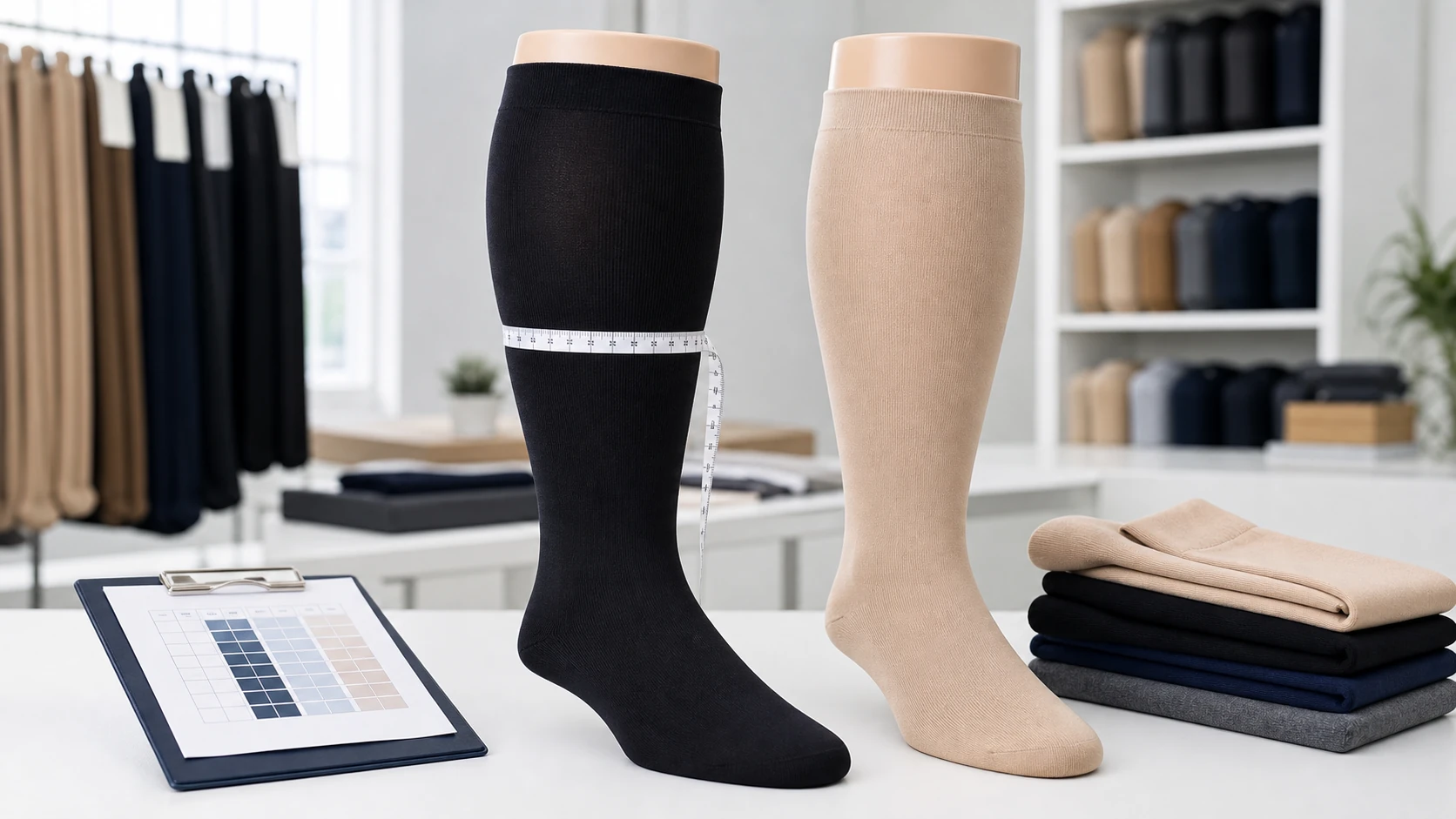
Calf circumference is the measurement that most clearly separates a true plus size compression sock from a standard sock offered in larger shoe sizes. When this measurement is vague, buyers can approve a product that fits the foot but pinches at the cuff, rolls down or is difficult to pull over the calf.
For wholesale and private label programs, the measurement method should be agreed before size grading begins. The factory, buyer and end customer must use the same measurement position and tape tension. That consistency improves sample decisions, size-chart clarity and customer expectations.
What buyers should define before sampling
A complete brief gives the factory a measurable target and reduces revisions. Confirm these points before treating a sample as ready for approval:
- Measure the ankle at its narrowest point above the ankle bone.
- Measure the calf at the widest visible point, with the tape parallel to the floor.
- Record lower-leg length from the floor to the bend behind the knee.
- Record foot length or shoe-size range separately from calf size.
- Use both centimeters and inches for international retail channels.
- Define how customers on a size boundary should choose their size.
A repeatable calf measurement method
Ask the wearer to stand naturally with weight distributed evenly. Wrap a soft tape around the widest part of the calf without pulling it tight or leaving a gap. The tape should touch the skin or thin clothing and remain level around the leg.
For consistency, take the measurement twice and record the larger result if there is a small difference between legs. Retail instructions should also tell customers whether to measure in the morning or after extended standing, because swelling can change the result.
Turn body measurements into a usable size range
A body-measurement chart is not the same as a finished-sock measurement chart. The factory must translate the target ankle and calf ranges into knitting dimensions, elastic recovery and compression performance. Increasing only the cuff width does not create a balanced wide calf fit.
Buyers should review how ankle, calf, leg length and foot size work together. A range that covers a larger calf may need additional grading instead of one extremely broad size that feels loose at the ankle and tight at the top.
Make customer instructions easy to follow
A useful online size chart should show a simple leg diagram, the exact measuring points and a table with ankle, calf and shoe-size ranges. Put calf circumference near the front of the decision process instead of hiding it below a generic shoe-size table.
Packaging should repeat the same ranges used online. When marketplace images, retail boxes and customer-service answers use different numbers, buyers create avoidable returns and negative reviews.
Sample approval checklist
Use the approved sample as a production reference, not only a sales photo. Record the results of the following checks and retain the final version:
- Compare the approved body range with the factory's finished-sock measurements.
- Fit-test the smallest, middle and largest calf values in each size.
- Check cuff pressure after at least two hours of wear.
- Confirm that the sock reaches below the knee without excessive folding.
- Wash the sample and recheck calf stretch and recovery.
- Approve the final size chart at the same time as the physical sample.
OEM and commercial planning
Use real measurement ranges in purchase specifications, packaging artwork and product listings. If the target market includes both wide and extra-wide calves, split the assortment into clear sizes rather than relying on a single universal claim. This makes customer service easier and gives the factory a more realistic production target.
Buyers can compare related styles in Our Products, review private label compression socks capability and share their target sizes, quantities and packaging through the contact form.
Common mistakes to avoid
- Using shoe size as the only size-selection measurement.
- Measuring the calf at a random height instead of the widest point.
- Pulling the tape tightly and recording a smaller body measurement.
- Publishing a range that was not checked on physical samples.
- Changing the size chart after packaging has already been printed.
Final recommendation
Treat calf measurement as a product specification, not just a marketing detail. A repeatable method and a tested size chart give buyers a stronger foundation for fit, quality control and repeat orders.
Specifications and claims should be confirmed for the product, sales channel and destination market before ordering or publishing customer-facing materials.
FAQ
Where should calf circumference be measured?
Measure around the widest part of the calf with a soft tape held level and comfortably against the body.
Is shoe size enough for plus size compression socks?
No. Shoe size helps with foot fit, but ankle and calf circumference are essential for selecting a wide calf compression sock.
Should both legs be measured?
Yes. Small differences are common, and using the larger measurement can help the wearer choose a more suitable size.
What units should a wholesale size chart use?
For international sales, show both centimeters and inches and keep the same ranges across listings, packaging and support materials.