
Direct answer
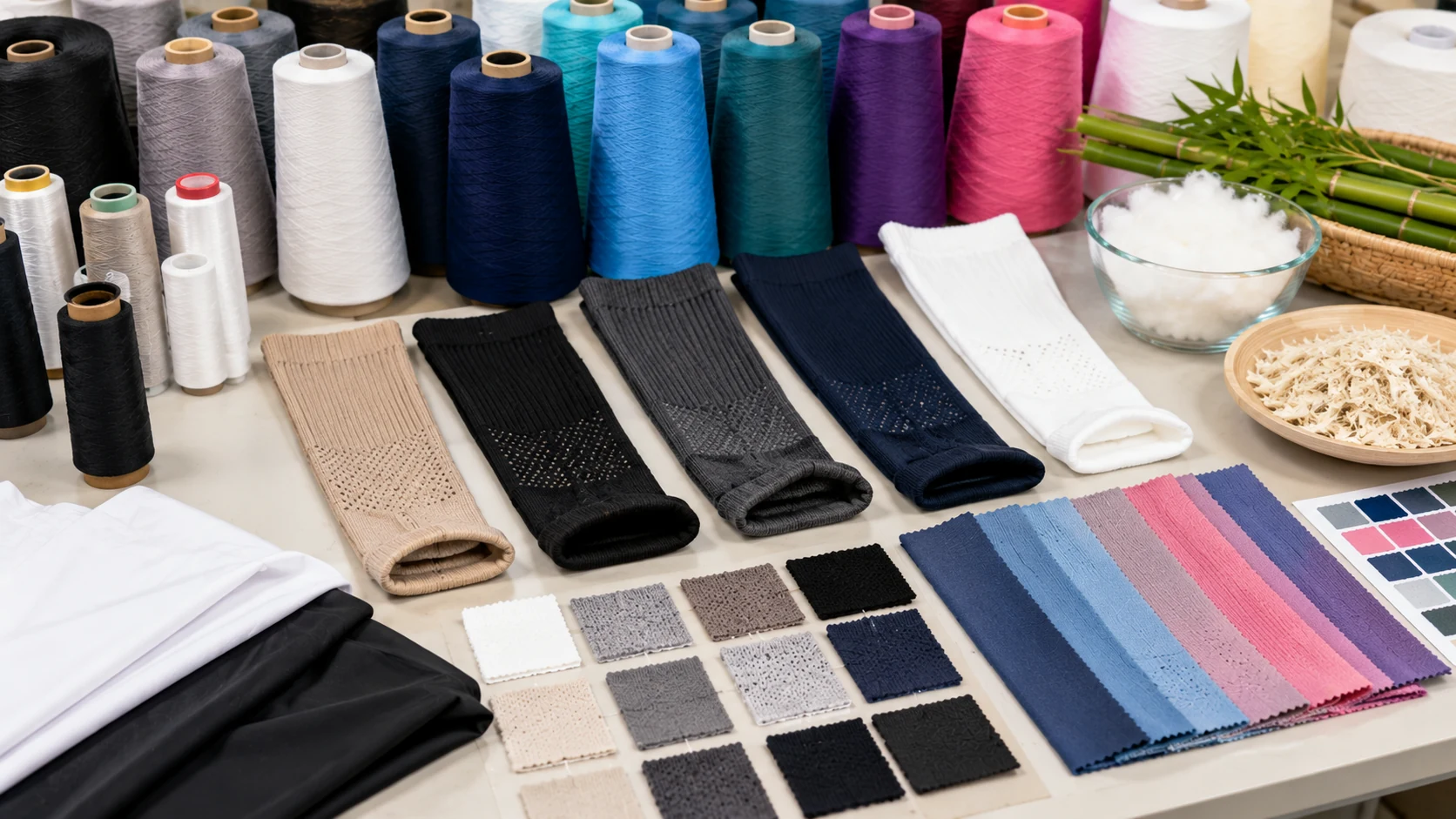
The best material for plus size compression socks is not determined by fiber name alone. Comfort depends on the complete construction: body yarn, covered elastic, knit density, moisture management, thickness, toe seam, cuff design and how well the sock recovers after stretching. A useful OEM brief should therefore describe the target wearer and performance requirement before specifying a blend.
Nylon and spandex: the common performance base
Nylon is widely used because it is smooth, durable, lightweight and compatible with controlled stretch. Spandex or elastane supplies elasticity and recovery. In many compression constructions, elastic yarn is covered with another yarn to improve skin feel and protect it during knitting and wear.
The percentages printed on a fiber label do not fully explain performance. Two socks with similar nylon and spandex percentages can feel different because yarn count, covering method, knit density and machine settings vary. Buyers should compare finished samples rather than choosing only by a composition number.
Bamboo blends: soft-hand and breathable positioning
Bamboo-derived viscose blends are often selected for a soft hand feel and moisture-absorbing comfort story. They can work well for private label ranges aimed at daily wear, warm weather or customers who dislike a highly synthetic touch. However, softness must be balanced with abrasion resistance, dimensional stability and sufficient elastic recovery.
Ask the supplier which yarn is used, how the fiber is identified on the label and whether the finished construction has been tested after washing. For a deeper product brief, see our bamboo fiber private label guide and bamboo plus size OEM program.
Cotton blends: familiar feel with construction tradeoffs
Cotton can provide a familiar, less shiny appearance and may suit casual or workwear collections. It also absorbs moisture, which can feel comfortable in moderate conditions but may dry more slowly than many synthetic fibers. High cotton content can add bulk and may reduce the crisp recovery expected from a compression product unless the elastic structure is designed carefully.
When considering cotton, review thickness inside shoes, drying time, pilling, shrinkage and the appearance of the sock after repeated stretching. A cotton-rich lifestyle sock and a technical graduated-compression sock may require different construction priorities.
Polyester and specialty yarns
Polyester can support colorfastness, durability and quick-drying performance. Cooling-touch, wicking or other functional yarns may be used for seasonal stories, but buyers should ask for the actual fiber specification and supporting test method before making a claim. A finish applied to the fabric may behave differently from a function built into the yarn.
Specialty fibers should be evaluated after washing and on the intended calf range. The cooling fabric OEM guide explains how to turn a material concept into measurable sample requirements.
Stretch recovery is critical for larger calf ranges
A plus size compression sock must open far enough for donning, fit the target calf without excessive pressure at the top and then recover enough to stay in position. Weak recovery can cause sliding, wrinkling and uneven support. Excessively rigid construction can make the sock difficult to put on and uncomfortable around the calf.
Buyers should record relaxed and stretched measurements, then repeat them after wear and wash cycles. Compare the smallest and largest sizes because the same yarn and stitch settings may not perform equally across a broad 2XL-7XL range.
Top-band material and knit structure
The cuff is a frequent source of complaints. A wide band can distribute pressure over a larger area, but width alone does not prevent digging or roll-down. Elastic modulus, circumference, knit density, body-to-cuff transition and leg length all influence comfort.
For users who need more grip, silicone dots can be considered, but they require skin-contact, wash and positioning checks. See the silicone grip dot cuff guide for OEM questions.
Toe, heel and sole comfort
A bulky toe seam can create friction even when the body fabric feels soft. Review seam placement, closure consistency and whether an open toe is more suitable for the target channel. The heel should fit without excessive fabric, and reinforced zones should not create abrupt changes in thickness.
For workwear or travel programs, shoe fit matters. A thicker sole can add cushioning but may reduce space inside footwear. Sample testing should use the type of shoe the final customer is likely to wear.
Material tests to request before bulk production
- Fiber composition verification and accurate care labeling.
- Dimensional change and appearance after repeated washing.
- Stretch recovery at the ankle, calf and cuff.
- Colorfastness, pilling and abrasion performance.
- Moisture, drying or cooling tests when those claims are used.
- Wear trials covering donning, long wear and shoe compatibility.
How to choose a blend for the sales channel
Medical and pharmacy buyers often prefer clean appearance, clear sizing and dependable repeat performance. Nurse and standing-worker ranges need durability and all-day cuff comfort. Travel lines may emphasize lightweight construction and moisture control. Fashion or gift channels can prioritize color and pattern, but stretched artwork must still look balanced on a larger calf.
Use one core construction for initial testing, then change only one or two variables at a time. Comparing several completely different blends, cuff structures and compression levels in the same round makes it difficult to identify what improved or weakened the sample.
FAQ
Is bamboo always more breathable than nylon?
Not automatically. Fiber choice contributes to moisture behavior, but knit density, thickness and finishing also matter. Compare finished samples and relevant test data rather than relying only on the fiber name.
Does a higher spandex percentage mean stronger compression?
No. Compression depends on yarn type, covering, knitting tension, construction and garment dimensions. The finished sock should be measured against the intended compression specification.
Which material is best for a first private label order?
A stable nylon-spandex construction is often a practical baseline. Buyers can then evaluate bamboo, cotton, cooling or seasonal variations after the size chart and fit have been confirmed.