
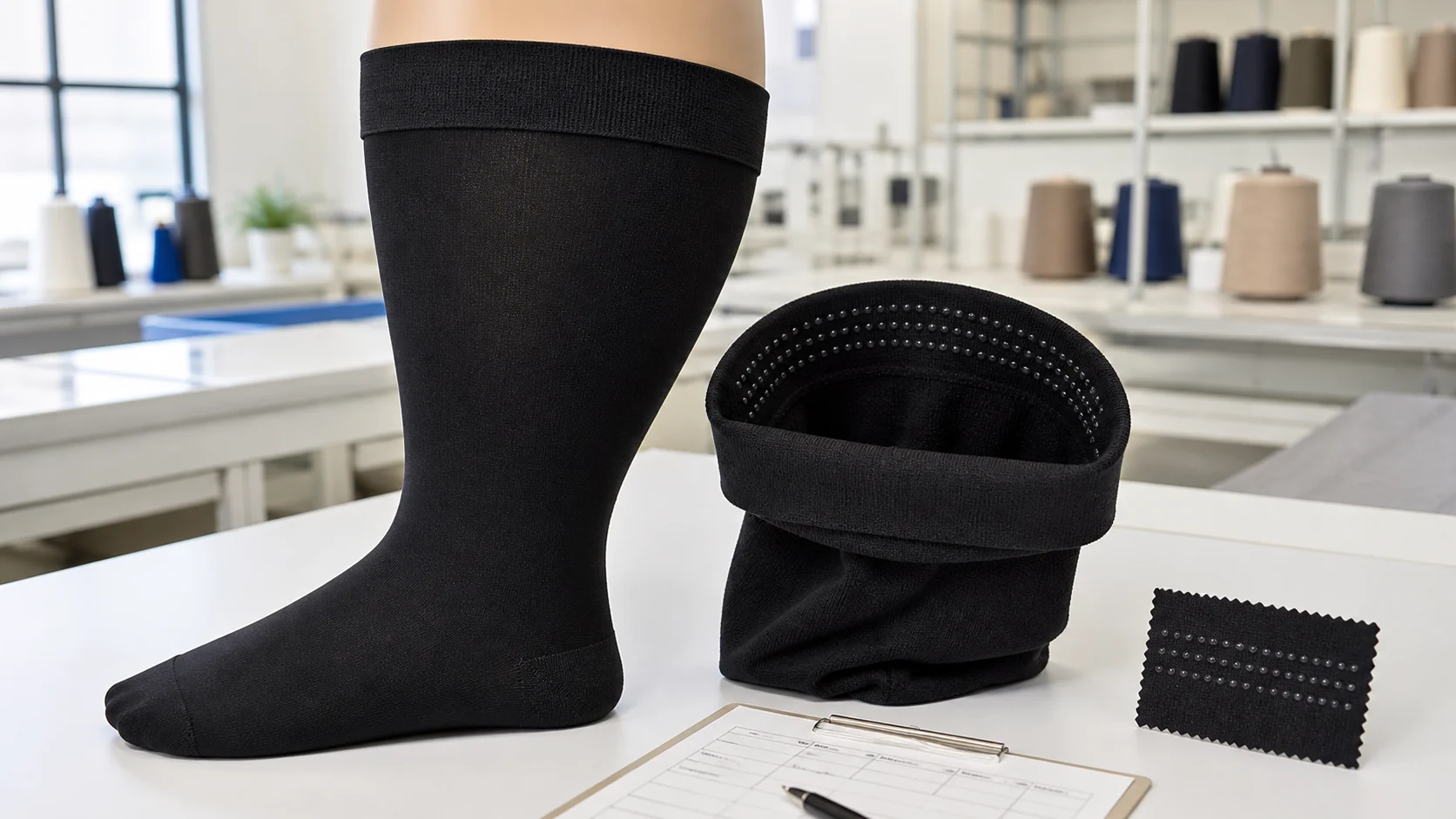
Some buyers ask for small grip dots inside the top cuff of plus size compression socks. The purpose is to increase friction between the cuff and the leg so the sock is less likely to slide during movement. This can be useful for selected workwear, travel, active and extended-wear collections.
The detail must be developed carefully. A plus size cuff covers a larger circumference and remains in direct contact with the skin. Too much grip can feel hot, pull body hair or leave visible marks, while too little grip may not improve stability. The right result comes from combining accurate calf grading, cuff elasticity and a tested dot layout.
Inner-cuff dots are not outsole grip dots
Grip socks used for yoga, hospitals or indoor activities usually place silicone shapes under the sole. This article concerns much smaller dots applied to the inside of the upper cuff. The two constructions have different functions, skin-contact requirements and testing priorities.
Use clear product language in the development brief: inner top-cuff silicone grip dots. Add a drawing that shows dot size, rows, spacing and distance from the cuff edge. This prevents the supplier from quoting an outsole process by mistake.
When cuff grip dots may be useful
- Wide calf socks designed for frequent walking or standing.
- Styles using a smooth cuff yarn with limited natural friction.
- Longer socks where movement can pull the fabric downward.
- Private label products positioned around stay-up cuff stability.
- Selected travel or workwear collections after wear testing.
Grip dots should not be used as a shortcut for poor fit. If the calf circumference is too small, the cuff may still roll and can become less comfortable. If it is too large, extra friction will not create the correct compression or hold.
Key design variables for an OEM sample
Dot material
Silicone is commonly discussed because it can provide controlled tack and flexibility. Other grip materials may also be available. Ask for the material declaration, color, curing process and applicable restricted-substance or skin-contact documentation before approval.
Dot size and spacing
Small, separated dots usually allow more open space than a continuous strip. Dot diameter, height, row count and spacing affect grip, ventilation and the feeling against skin. Large or tightly packed dots can create concentrated contact areas.
Cuff width and placement
A wider cuff can distribute force over a larger area. The dot rows should sit fully inside the cuff and away from the edge or seam. Confirm whether the cuff is single layer, double layer or folded, because the construction affects stretch and application.
Color and appearance
Transparent dots are discreet, while black or colored dots can be easier to inspect during quality control. Colored material must be checked for transfer, staining and consistency on light-colored socks.
Wide calf sizing still comes first
The buyer should provide target ankle circumference, calf circumference, foot length and knee-high length. The cuff should be evaluated at the smallest and largest measurements within each size. A 2XL-7XL label alone is not enough to define the required extension.
During fitting, inspect the complete upper leg rather than only the cuff. A sock can slide because the heel is misplaced, the leg length is wrong or the body knit lacks recovery. Correct those issues before deciding that more grip is necessary.
Comfort and skin-contact checks
Wear testing should include sitting, walking, standing and normal temperature changes. Ask testers to report pulling, pinching, heat, itching, hair traction and marks after removal. Include users near both ends of the target calf range.
For material assurance, buyers can request relevant third-party documentation for the finished cuff components. OEKO-TEX STANDARD 100, for example, covers textiles tested for harmful substances and includes product classes based on skin contact. The exact certificate scope and validity should be checked rather than assumed from a yarn supplier's general claim.
Do not describe the cuff as hypoallergenic or suitable for every sensitive user unless the destination-market requirements and supporting evidence justify that claim.
Wash and durability testing
Grip-dot adhesion can change after repeated stretching, detergent exposure and drying. Define the expected care method and the number of cycles in the purchase specification. AATCC TM135 provides standardized procedures for measuring dimensional change after home laundering, but buyers should add finished-cuff inspections for the grip application.
After each agreed interval, inspect for missing dots, cracking, flattening, excessive tack, color transfer and separation from the knit. Measure cuff dimensions and recovery, then repeat the wear check. A dot can remain attached but still lose the intended friction or become uncomfortable.
Sample approval checklist
- Confirm the dot material and applicable compliance documents.
- Record dot diameter, height, spacing, rows and cuff position.
- Measure cuff stretch and recovery before laundering.
- Fit-test the smallest and largest target calves.
- Check skin feel during walking, sitting and standing.
- Inspect marks, hair pull, heat and cuff rolling after wear.
- Repeat adhesion and recovery checks after wash cycles.
- Approve one sealed sample and inspection standard for production.
MOQ, cost and production planning
Grip-dot application adds a process after knitting and may require a fixture, screen or setup for the selected pattern. The final MOQ and cost depend on dot material, color, coverage, sock quantity and factory equipment. Ask the supplier to separate the grip application cost from the base sock quote.
For a first order, consider testing grip dots on one core color and one calf range before applying them to every SKU. Compare customer feedback against a control style with the same yarn, sizing and compression but no dots.
Packaging and customer instructions
Show that the grip elements are inside the top cuff so customers do not confuse the product with non-slip sole socks. Care instructions should match the approved wash and drying method. Avoid suggesting lotions, powders or other substances unless their compatibility with the grip material has been tested.
Buyers can review wide calf compression socks, compare why compression socks roll down, read the toe seam and cuff construction guide, and discuss custom development through our private label compression socks page.
FAQ
What are silicone grip dots on compression socks?
They are small grip elements applied to the inside of the top cuff. They increase friction against the leg and are different from dots placed under a sock sole.
Can grip dots stop every plus size compression sock from rolling down?
No. They can support cuff stability, but they cannot correct the wrong circumference, leg length, heel position or fabric recovery.
How should buyers test grip-dot cuffs?
Test every target size for comfort and movement, then compare adhesion, tack, cracking, recovery and appearance before and after the agreed wash cycles.
Can silicone dots be added to a private label order?
Yes, subject to factory capability and sample approval. Confirm material, layout, cuff width, compliance documents, MOQ, cost and wash requirements before bulk production.