
Direct answer
Compression socks usually roll down because the product does not match the wearer's calf shape or because the cuff, leg length and yarn recovery are not balanced. The problem is rarely solved by making the top band wider alone. B2B buyers should study where and when the sock rolls, compare the user's measurements with the size chart and test revised samples during movement and after washing.
Cause 1: the calf range is too small
If a sock is marketed as plus size but its tested calf range remains close to a standard size, the upper leg fabric is forced to stretch excessively. The cuff may dig in, fold over or migrate downward as the wearer moves. A vague XL label can hide this problem.
Publish actual calf ranges and teach customers to measure the widest part of the calf. When return data shows many users above the current limit, add a separate extra wide compression sock rather than asking one size to cover every circumference.
Cause 2: the cuff is too tight
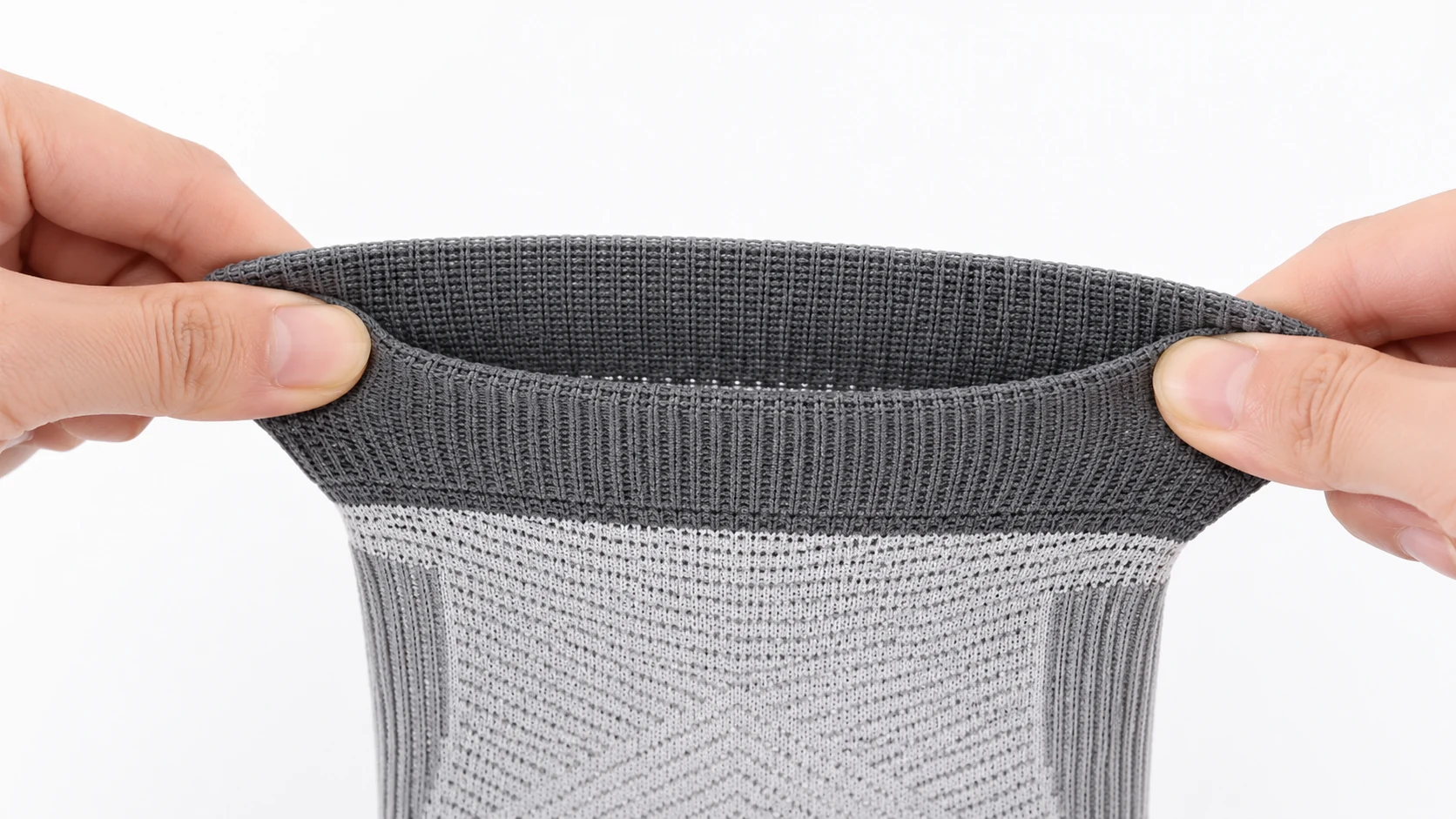
An overly tight cuff can roll into a narrow band, especially on a conical or softer calf. Increasing band width may distribute pressure, but the cuff opening, elastic strength and knit density must also be adjusted. A band that feels acceptable for ten minutes may still become uncomfortable during a long shift.
Wear tests should record pressure marks and comfort after several hours. Buyers should test both ends of the intended calf range because the same cuff can feel loose on one user and restrictive on another.
Soft top-band requests need measurable specifications
Wearers often describe a digging or rolling band as a sensory comfort problem and ask for something softer. “Soft” is useful feedback, but it is not a factory specification. Translate it into cuff circumference, width, knit density, elastic recovery and a defined long-wear test.
A softer hand feel can still slide if recovery is weak, while a secure cuff can become restrictive at the upper calf boundary. Compare the same body construction with controlled cuff variations and use the grip-dot cuff guide only after the underlying size and length are correct.
Cause 3: the cuff is too loose or has weak recovery
A very soft cuff may initially feel comfortable but fail to hold the sock in position. Repeated stretching, heat or unsuitable washing can weaken elastic recovery. Once the upper band expands and does not return, gravity and movement pull the fabric down the leg.
Compare relaxed cuff measurements before wear, after wear and after repeated washes. Material percentages alone do not predict recovery; yarn covering, stitch structure and finishing also matter.
Cause 4: the leg length is incorrect
A sock that is too long can bunch below the knee and push against the cuff. A sock that is too short may be stretched vertically, creating downward tension. Heel placement can produce a similar effect if the heel pocket does not align with the wearer.
Include heel-to-knee length in the size chart and inspect the sock on users with representative leg lengths. Do not assume that customers with the same calf circumference have the same lower-leg length.
Cause 5: ankle and calf grading is unbalanced
When the calf area is widened without redesigning the ankle transition, fabric can collect above the ankle. Those wrinkles can grow during wear and contribute to downward movement. Conversely, an ankle that is too tight can make donning difficult and shift the sock during application.
The solution is a proportional grading plan for the foot, ankle, calf and cuff. Review the plus size grading guide before changing only one measurement.
Cause 6: the sock is pulled on incorrectly
Pulling hard from the cuff can overstretch the top and leave uneven tension in the leg. Users should place the heel correctly and smooth the sock upward in sections without folding the band. However, instructions should not be used to excuse a product that is fundamentally too small.
Include simple donning guidance on the package or product page, particularly for firmer compression and first-time users. A short instructional image sequence can reduce avoidable complaints.
Cause 7: the construction changes after washing
Heat, bleach and fabric softener can damage elastic fibers, but a durable product should still be evaluated under its recommended care conditions. Shrinkage in length, cuff growth or loss of body recovery may create roll-down after only a few washes.
Run controlled wash and stretch-recovery tests before bulk approval. Packaging care instructions should match the tested method. Our wash and recovery guide explains the checkpoints.
How to diagnose roll-down complaints
- Record the wearer's foot, ankle, calf and leg-length measurements.
- Ask whether the sock rolls immediately or only after several hours.
- Identify whether the band folds, slides or leaves pressure marks.
- Check heel position, ankle wrinkles and excess length.
- Confirm wash method and number of wash cycles.
- Compare the complaint sample with a retained approval sample.
This information helps the factory distinguish a sizing issue from material fatigue, misuse or a production variation. Photos showing the full lower leg are often more useful than a close-up of the cuff alone.
OEM sample test for roll-down
Use wearers near the lower and upper calf limits. Test donning, two hours of normal activity, sitting, walking and a longer work or travel period. Repeat after several washes. Score cuff comfort, stay-up performance, wrinkles, leg length and visible marks using the same form for each sample.
Change one variable at a time where possible. If cuff circumference, yarn, leg length and compression all change in the next sample, the buyer cannot tell which change solved the problem.
OEM solution
Start with a clear wide calf measurement guide, define separate sizes when the calf range is too broad and document cuff and length requirements in the sample sheet. Silicone grip dots may help selected styles, but only after the basic fit is correct.
FAQ
Do wider cuffs always stop roll-down?
No. Wider cuffs help only when circumference, elastic recovery, ankle-to-calf grading and sock length are also correct.
Can OEM samples test roll-down?
Yes. Buyers should test walking, sitting, standing, washing and long-shift wear on users throughout the target calf range before approving bulk production.
Do silicone grip dots solve every stay-up problem?
No. They can add surface grip, but they cannot correct a calf range that is too small, weak recovery or incorrect leg length. Skin-contact comfort and wash durability must also be checked.