
Direct answer
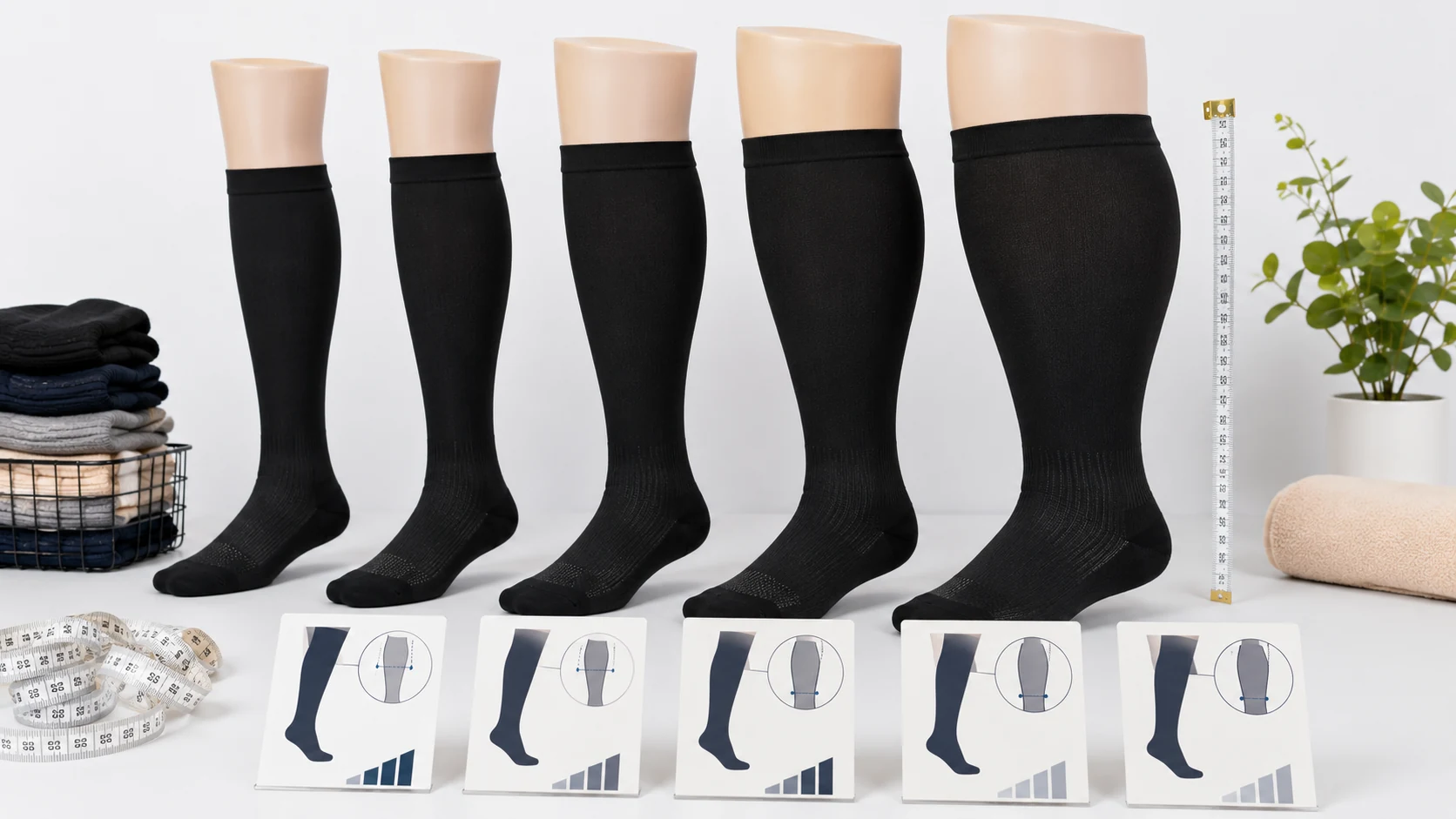
Wide calf and plus size compression socks overlap, but the terms describe different sizing priorities. Wide calf usually means a larger calf circumference within an otherwise conventional foot-size system. Plus size can describe a more complete proportional range that includes a larger foot, ankle, calf and leg length. Buyers should define the measurements behind either label instead of relying on the name alone.
What wide calf compression socks usually mean
A wide calf product is designed for customers whose standard knee-high socks fit the foot but feel too tight around the lower leg. The main adjustments may involve calf circumference, top-band opening and the transition between ankle and calf. Some buyers also add a different leg length to prevent fabric from bunching below the knee.
Wide calf ranges are useful for medical supply, workwear, nursing, travel and general wellness channels because they solve a specific fit complaint without necessarily changing the entire foot-size architecture. However, there is no universal circumference that all brands use. The actual range must be printed clearly.
What plus size compression socks usually mean
Plus size products are often expected to accommodate more than calf width. A true plus size chart may grade foot length, ankle circumference, calf circumference and heel-to-knee length together. It may also use cuff and yarn constructions that make donning easier while preserving recovery.
Retail labels such as 2XL, 4XL or 7XL are not self-explanatory. Two brands can use the same size name for very different measurements. The package and online listing should show actual body-measurement ranges so customers do not have to guess.
Start with the customer's main fit problem
If reviews say the foot fits but the top is painfully tight, begin with a wide calf construction. If customers report that the toe, heel, ankle and calf all feel undersized, a complete plus size range is more appropriate. If standard wide calf products still do not cover the market, consider a separate extra wide compression sock program.
Return data is valuable. Group complaints by cuff tightness, roll-down, difficult donning, foot length, ankle wrinkles and leg length. This separates a sizing problem from a material or construction problem.
Measurements buyers should define
- Foot length or shoe-size conversion for each market.
- Ankle circumference at a consistent measuring point.
- Maximum calf circumference at the widest part of the calf.
- Heel-to-knee or finished leg length.
- Target cuff opening and acceptable stretch range.
Body measurements and finished sock measurements should not be mixed in one chart. Buyers should also state whether measurements are taken relaxed, stretched or on a leg form. For a repeatable method, use our calf circumference guide.
How the construction may differ
A wider product may require changes to knitting tension, stitch count, elastic covering, cuff structure and grading. Adding width only at the top can leave the ankle too loose or create a sharp pressure transition. Enlarging every dimension by the same percentage can also produce a foot that is too long for customers who mainly need more calf room.
That is why a wide calf version and a full plus size version may deserve separate technical specifications. The supplier should explain how the ankle, calf and cuff remain balanced while the intended compression profile is maintained.
Product-line options for online stores
Online retailers can keep selection clear by offering a standard range, a wide calf range and an extra wide or extended plus size range only when data supports each segment. Too many overlapping labels increase returns. Use distinct measurement charts and comparison copy to help customers select the right line.
For a first launch, core black and skin-tone colors can validate fit before adding many patterns. Once the size system is stable, colors, three-packs, open toe, zipper and seasonal materials can extend the assortment without changing the central fit promise.
Sampling and wear testing
Test the smallest and largest planned calf ranges. Wear trials should include donning, standing, sitting, walking and several hours of normal movement. Record cuff marks, slipping, wrinkles, toe position and how the sock feels after washing.
Do not approve artwork or print thousands of size labels before grading is confirmed. The sample approval checklist can be used to organize fit and packaging decisions.
Product naming and claim language
Names should describe the range accurately. Use wide calf when the defining feature is calf room, plus size when the overall proportions are extended and extra wide when a clearly larger circumference is offered. Avoid using these terms as interchangeable marketing labels if the underlying measurements are the same.
Compression and medical claims require separate review. A larger size does not automatically deliver a different pressure level. Confirm the finished product specification and destination-market labeling rules before making support or therapeutic statements.
FAQ
Are all plus size compression socks wide calf?
Most plus size knee-high products provide more calf room, but the amount varies. Buyers should compare the published circumference range rather than assuming the label guarantees a specific fit.
Can a regular sock be converted into a wide calf style?
Sometimes, but the conversion should review the ankle, calf, cuff, leg length and compression behavior together. Increasing only the cuff opening may not solve the full fit problem.
Which term is better for SEO and product listings?
Use the term that accurately matches the product, then include the actual measurements. A page can explain related language such as large calf, wide calf and plus size, but the product title and size chart should make the principal fit promise clear.
OEM tip: include target pressure level, foot, ankle, calf and leg-length ranges, yarn preference and package format in the first inquiry to reduce sampling rounds.