
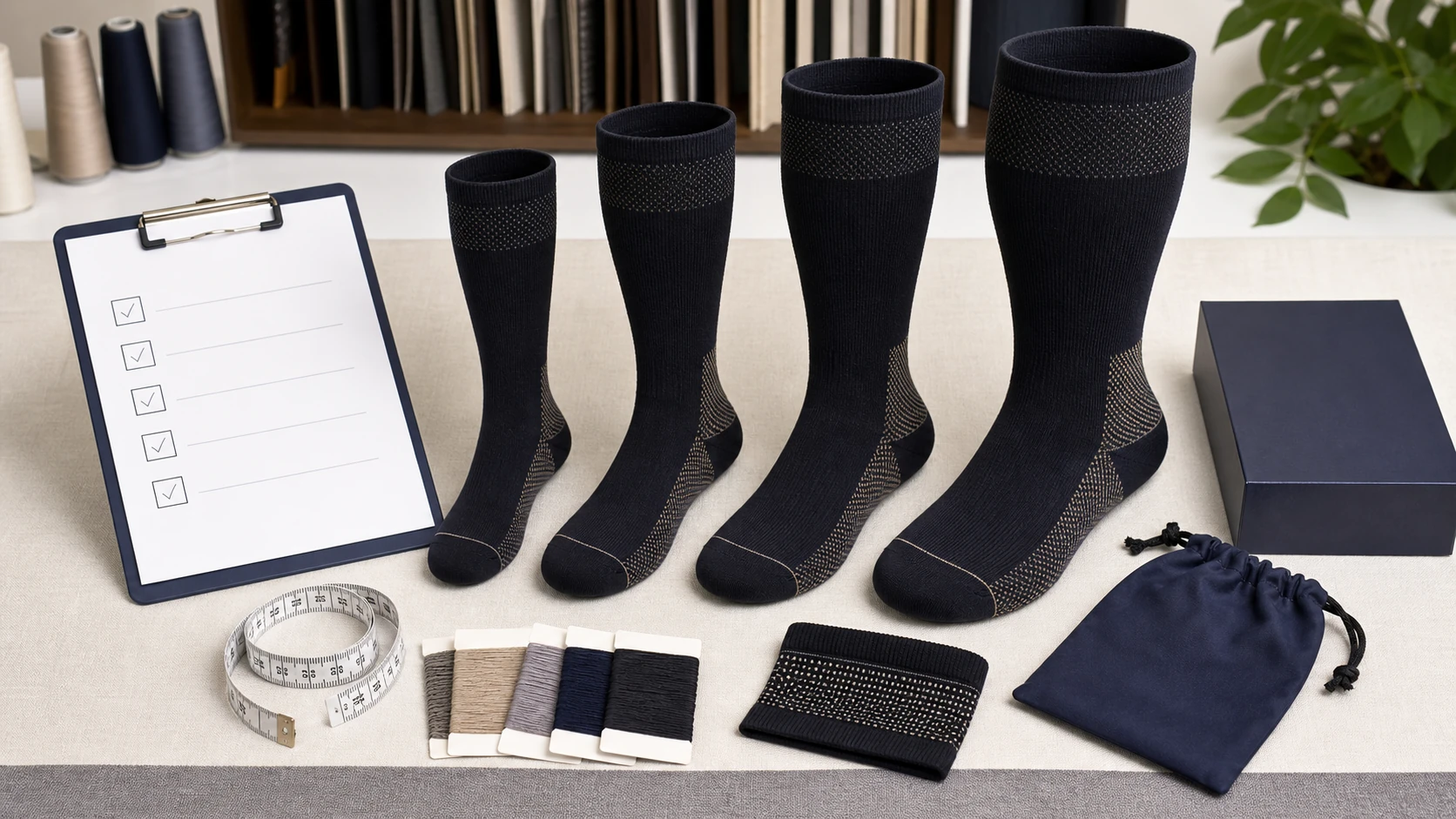
Sample approval is the point where a product idea becomes a production standard. A quick yes based on appearance can leave calf fit, pressure, wash recovery and packaging details undefined, which makes bulk disputes harder to solve.
The approval process should combine physical testing with a written record. Keep one signed or sealed reference sample and a specification sheet that identifies every feature the factory must reproduce.
What buyers should define before sampling
A complete brief gives the factory a measurable target and reduces revisions. Confirm these points before treating a sample as ready for approval:
- Approved yarn composition, color and hand feel.
- Body and finished-sock measurements by size.
- Compression specification and test documentation.
- Cuff, heel, toe and seam construction.
- Logo, label, barcode and packaging artwork.
- Measurement tolerances and inspection method.
Review fit on the target body range
A sample should be checked on wearers or forms that represent the intended ankle, calf, foot and leg-length ranges. Inspect heel placement, fabric distribution, cuff position and whether the sock can be put on and removed as expected.
Do not approve a complete 2XL-7XL range from one middle size. Edge sizes carry the highest risk and deserve separate review.
Test recovery, not just first wear
Record measurements before washing, follow the proposed care instructions and measure again after drying. Look for length change, calf stretch loss, cuff deformation, color change and seam problems.
A sample that looks good once but loses shape quickly can create poor repeat-purchase performance. Buyers should agree how many wash cycles are relevant for approval.
Approve packaging as part of the product
Check the size sticker, color name, material statement, care instructions, barcode, country information and carton marks. Make sure the chart on the package matches the chart used online.
Review physical pack-out as well as artwork. A pouch or box must fit the folded sock without excessive pressure, wasted space or damage in transit.
Sample approval checklist
Use the approved sample as a production reference, not only a sales photo. Record the results of the following checks and retain the final version:
- Photograph and measure the approved sample.
- Sign and date the specification sheet.
- Keep an approved color reference.
- Test the smallest and largest sizes.
- Confirm wash and recovery results.
- Approve all packaging files before bulk printing.
OEM and commercial planning
Link approval to the purchase order. State that bulk goods will be inspected against the approved sample, specification and tolerances. When a change is requested, issue a revised version instead of relying on chat messages. This protects both buyer and factory from unclear expectations.
Buyers can compare related styles in Our Products, review private label compression socks capability and share their target sizes, quantities and packaging through the contact form.
Common mistakes to avoid
- Approving appearance without measurements.
- Testing only one size.
- Leaving compression verification until after production.
- Using an unapproved chart on packaging.
- Failing to retain a reference sample.
Final recommendation
A good sample approval checklist is short enough to use and detailed enough to inspect. Approve fit, performance, construction and packaging together before authorizing bulk production.
Specifications and claims should be confirmed for the product, sales channel and destination market before ordering or publishing customer-facing materials.
FAQ
How many samples should a buyer approve?
At minimum, review representative sizes including the smallest and largest in the range, plus final packaging where applicable.
What is a sealed sample?
It is the final approved physical reference retained by the buyer and factory for comparison with bulk production.
Should wash testing happen before approval?
Yes. Wash and recovery results can reveal changes that are not visible in a new sample.
Can packaging be approved later?
Artwork may follow the product sample, but it should be approved before bulk printing and checked against the final size and care information.