
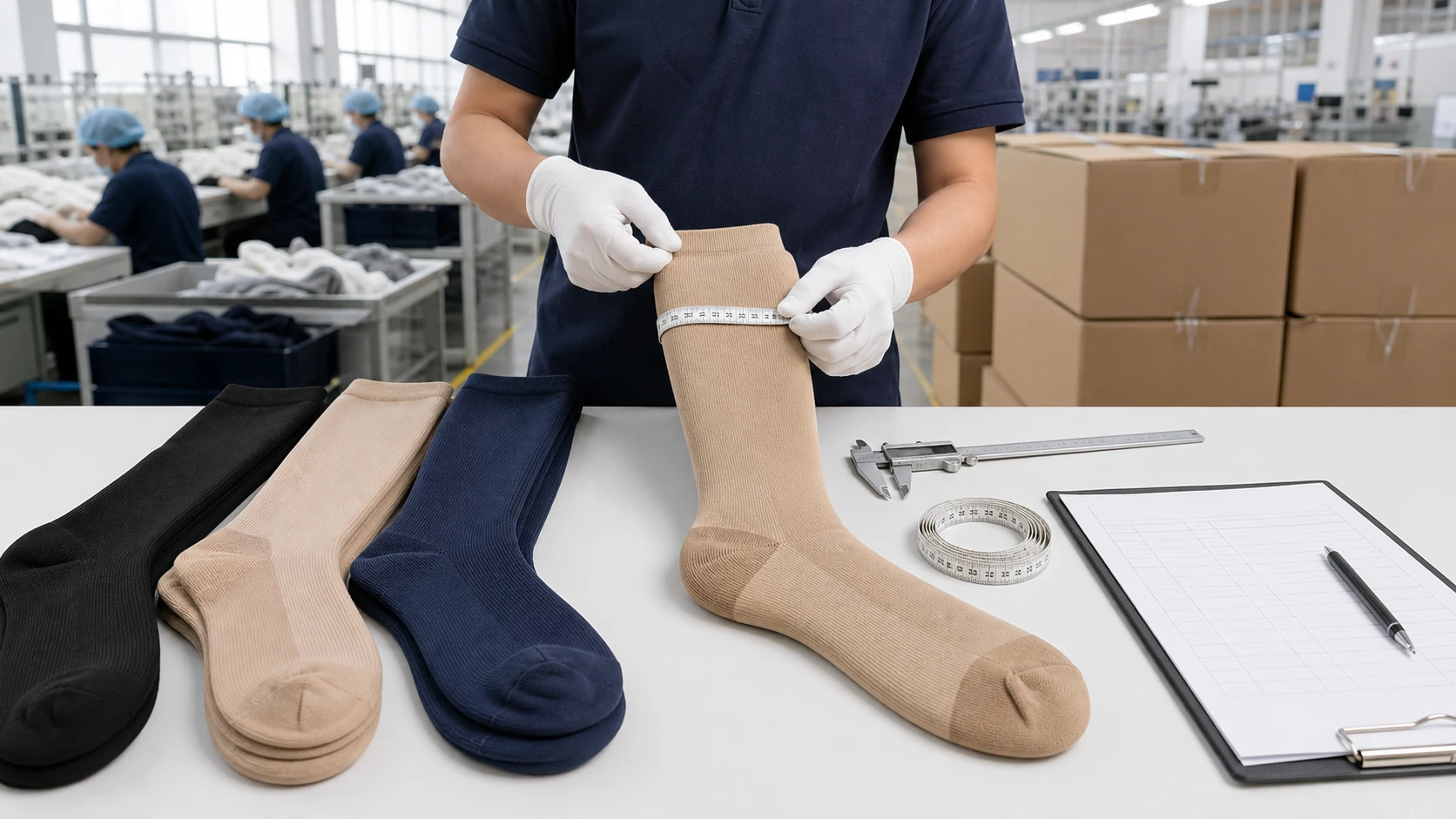
Bulk quality control is not limited to finding visible defects. For plus size compression socks, the inspection must also protect fit, stretch recovery and size consistency across production lots.
A useful QC plan starts with the approved sample and measurable tolerances. The inspector should know which features are critical to function, which are visual and which relate to packaging or shipment.
What buyers should define before sampling
A complete brief gives the factory a measurable target and reduces revisions. Confirm these points before treating a sample as ready for approval:
- Sampling level and inspection quantity.
- Critical, major and minor defect definitions.
- Finished measurements and tolerances by size.
- Color, workmanship and logo standards.
- Stretch or performance checks required during production.
- Packaging, barcode, carton and quantity checks.
Control measurements during production
Check leg length, foot length, calf width, cuff width and other agreed dimensions at the start, middle and end of production. Early checks allow the factory to correct machine settings before a full lot is completed.
Measurements should follow one documented method. Different inspectors can produce different results if the sock is stretched, flattened or positioned inconsistently.
Inspect construction and appearance
Look for holes, dropped stitches, broken elastic, uneven seams, poor toe closure, cuff distortion, color variation and contamination. Compare logo position and pattern alignment with the approved sample.
Functional areas deserve higher priority than small cosmetic differences. A defect that affects donning, fit or durability should be classified more seriously.
Verify packaging and traceability
Confirm that each pair has the correct size, color, barcode and care information. Count pack quantities and check that carton labels match the purchase order.
Retain lot records, production dates and inspection photos. Traceability helps buyers investigate complaints and compare repeat orders.
Sample approval checklist
Use the approved sample as a production reference, not only a sales photo. Record the results of the following checks and retain the final version:
- Use calibrated measuring tools and a written method.
- Compare random units with the approved reference sample.
- Check all sizes and colors represented in the shipment.
- Perform agreed stretch or recovery checks.
- Scan representative barcodes.
- Photograph findings and record corrective action.
OEM and commercial planning
State the inspection standard before production begins. Buyers may use factory self-inspection, third-party inspection or a combination depending on order value and risk. For repeat orders, compare results with previous lots to spot gradual changes in sizing or materials.
Buyers can compare related styles in Our Products, review private label compression socks capability and share their target sizes, quantities and packaging through the contact form.
Common mistakes to avoid
- Inspecting only appearance.
- Checking one size in a multi-size order.
- Using tolerances that were never agreed.
- Waiting until final inspection to find measurement drift.
- Ignoring incorrect labels when the sock itself is acceptable.
Final recommendation
Make fit-related measurements and construction the core of the QC plan. A documented process gives buyers stronger evidence, faster corrective action and more consistent repeat production.
Specifications and claims should be confirmed for the product, sales channel and destination market before ordering or publishing customer-facing materials.
FAQ
What should be treated as a critical defect?
Any issue that creates a safety concern or makes the product unsuitable should be defined as critical in the agreed inspection standard.
Should every pair be measured?
Usually a sampling plan is used, but the quantity and distribution should represent all sizes, colors and production lots.
When should QC begin?
Measurement and workmanship checks should begin during production, followed by final inspection before shipment.
Why keep inspection photos?
Photos support corrective action, supplier communication and comparison across repeat orders.