
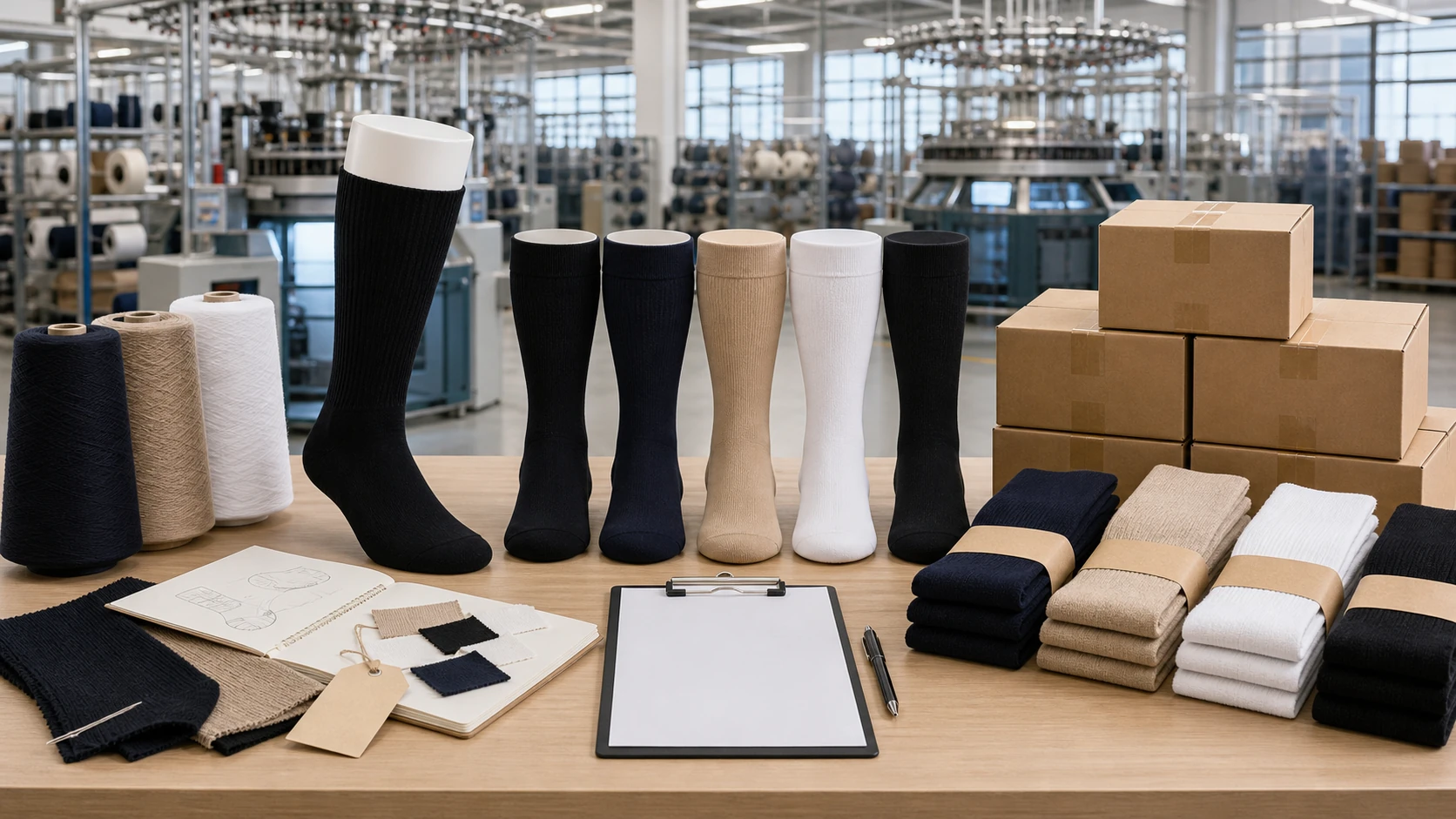
A reliable production timeline is a sequence of decisions, not only a promised ship date. Delays usually appear when size ranges, compression targets, artwork or packaging are still changing after samples have begun.
Buyers can shorten the process by preparing a complete brief and approving each stage in writing. The factory can then reserve yarn, machine time and packaging with fewer revisions.
What buyers should define before sampling
A complete brief gives the factory a measurable target and reduces revisions. Confirm these points before treating a sample as ready for approval:
- Product brief and target market.
- Size, compression, material and construction specification.
- Sample rounds and approval authority.
- Testing and documentation requirements.
- Packaging artwork and barcode deadlines.
- Production, inspection and shipping milestones.
Stage 1: brief and feasibility review
Share the calf range, ankle range, foot sizes, compression target, colors, packaging and estimated quantity. The factory should confirm machine capability, material availability, MOQ and likely development risks.
Resolve major questions before requesting a cosmetic sample. A beautiful color sample is not useful if the intended calf range cannot be produced consistently.
Stage 2: samples, tests and artwork
Review fit samples first, then confirm color, logo and packaging. Some projects can combine these steps, while a new extra-wide or zipper construction may need more than one technical round.
Complete wear, wash, measurement and required performance checks before issuing final approval. Freeze the size chart before packaging is printed.
Stage 3: production, inspection and shipment
After approval and deposit, the factory prepares yarn, schedules knitting, completes finishing and packs the order. In-process checks should monitor measurements and workmanship before final inspection.
Allow time for corrective action, export documents and transportation. A timeline that ends on the knitting date is not a complete delivery plan.
Sample approval checklist
Use the approved sample as a production reference, not only a sales photo. Record the results of the following checks and retain the final version:
- Record the date and version of each sample.
- Approve technical fit before final packaging.
- Confirm production materials match the approved sample.
- Set artwork and barcode deadlines.
- Schedule in-process and final inspections.
- Add realistic shipping and customs time.
OEM and commercial planning
The typical timing published by pluscompressionsocks is 3-5 days for regular samples after requirements are confirmed and 15-20 days for regular production after sample confirmation. New constructions, testing, custom yarn, packaging and large orders can require more time, so buyers should reconfirm the schedule for each project.
Buyers can compare related styles in Our Products, review private label compression socks capability and share their target sizes, quantities and packaging through the contact form.
Common mistakes to avoid
- Starting samples without a complete size brief.
- Changing the product after packaging approval.
- Treating sample time as the complete lead time.
- Leaving inspection until the planned ship day.
- Assuming every repeat order uses the same materials and schedule.
Final recommendation
Build the timeline around approvals and dependencies. A clear brief, controlled sample versions and early packaging decisions are the best tools for protecting the delivery date.
Specifications and claims should be confirmed for the product, sales channel and destination market before ordering or publishing customer-facing materials.
FAQ
How long does a regular sample take?
The site's typical reference is 3-5 days after requirements are confirmed, but complex development may take longer.
When should packaging artwork be finalized?
After product details and size ranges are stable, but early enough to meet packaging supplier lead times.
Can bulk production start before all tests are complete?
That increases risk. Buyers should complete required fit, performance and compliance checks before final bulk approval.
What can delay a repeat order?
Yarn availability, color changes, updated packaging, capacity, testing and specification changes can all affect timing.