
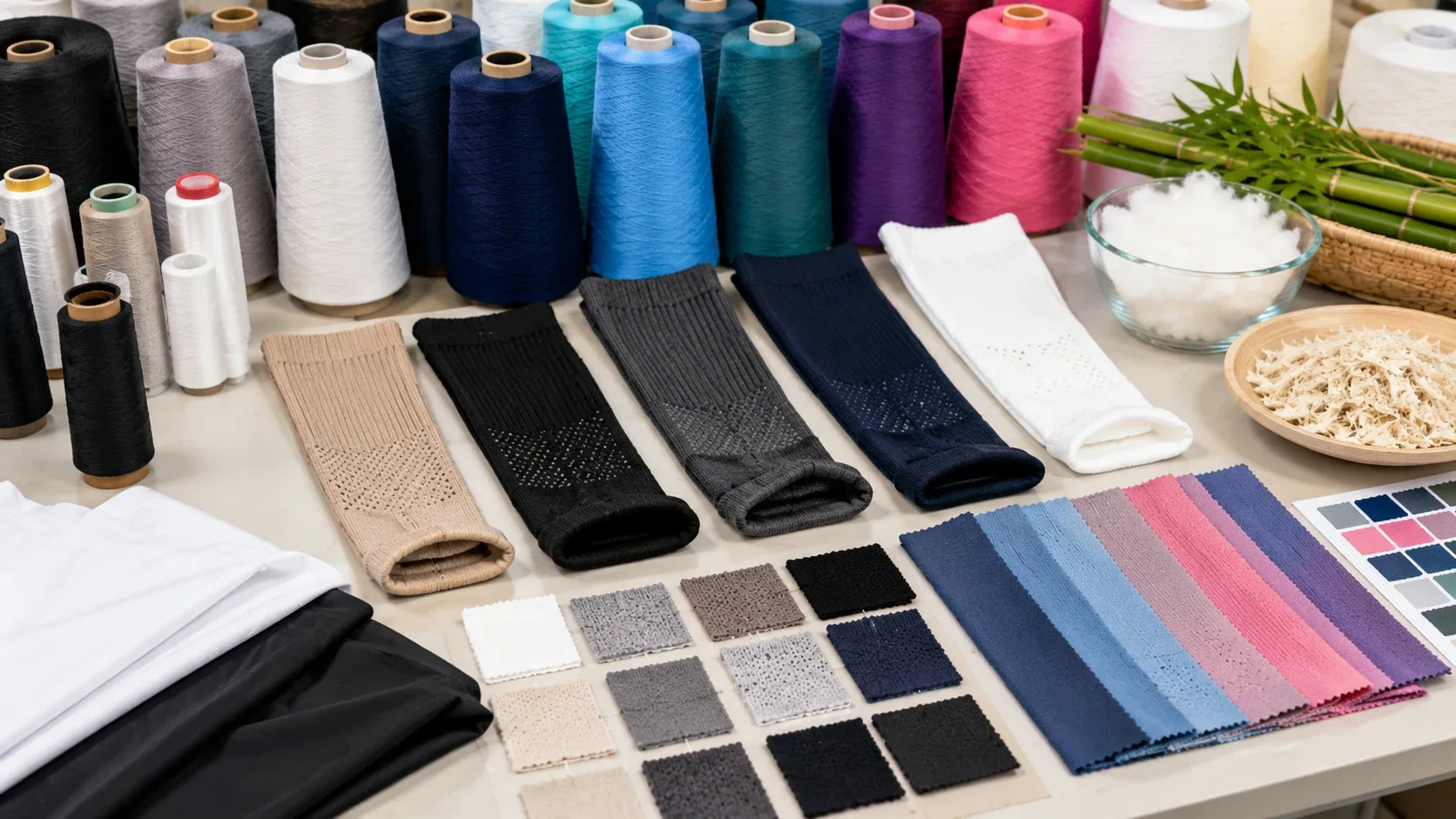
Why bamboo fiber matters for plus size compression socks
Bamboo fiber plus size compression socks can be a useful product direction for private label brands that want a softer, comfort-focused story. Buyers in the wide calf category are not only comparing compression level. They are also comparing touch, stretch, breathability, cuff comfort and whether the sock feels wearable for a full day.
For B2B buyers, bamboo fiber is best positioned as a material option inside a complete product plan. The product still needs correct calf sizing, stable compression, strong recovery, clear packaging and careful sample testing. Material alone cannot solve fit problems, but it can help create a more comfortable product line when the structure is planned correctly.
What private label brands should understand about bamboo blends
Most compression socks are made from blended yarns, not a single fiber. A bamboo fiber program may include bamboo viscose, nylon, polyester, spandex or other elastic yarns depending on the requested hand feel, compression target and durability requirement.
Private label buyers should ask the factory to explain the actual yarn composition, not only the marketing name. The blend affects softness, stretch, drying feel, fabric thickness, color performance and how well the sock holds its shape after repeated wear.
For plus size compression socks, the blend must support both comfort and recovery. If the fabric feels soft but loses shape quickly, customer feedback may be poor. If the compression is strong but the cuff is too tight, the product may not suit wide calf customers.
Material benefits buyers can use in product positioning
Bamboo fiber blends are often chosen for a soft hand feel and comfort-driven product positioning. This can be helpful for customers who dislike rough or heavy socks, especially when the socks are worn during work, travel or daily routines.
For private label listings, buyers can highlight comfort, soft touch, breathable fabric positioning and a smooth wearing experience. These messages are easier for customers to understand than technical yarn descriptions alone.
Buyers should keep claims practical and accurate. It is better to say the sock is designed for soft everyday comfort than to make unsupported medical or performance claims. Clear, honest wording helps reduce compliance risk and builds trust with wholesale accounts.
Wide calf fit still comes first
In the plus size compression socks category, calf circumference is the first buying issue. A bamboo blend can improve touch and wearing comfort, but the sock must still fit the customer's calf range correctly.
Wholesale buyers should confirm ankle range, calf range, sock length, foot size, stretch recovery and top cuff width before approving a sample. For online sales, the size chart should be easy to read and should clearly show the wide calf range rather than only shoe size.
If the product is sold as wide calf compression socks or plus size compression socks, the fit standard should be visible in both packaging and product images.
Best product styles for bamboo fiber programs
The safest starting style is a knee-high closed toe bamboo blend compression sock in black, beige, white or navy. These colors are practical for daily wear and easy for private label buyers to place into a basic product line.
For customers who prefer more toe freedom, an open toe version can be added. For users who need easier donning, buyers may also consider zipper plus size compression socks as a separate extension.
For online stores, a bamboo fiber line can start with two or three core colors and one value pack. After collecting reviews, buyers can add seasonal colors, light patterns or retail packaging upgrades.
Color, texture and packaging choices
Bamboo fiber compression socks can be positioned as a premium comfort line, so packaging should feel clean and easy to understand. Private label options may include printed pouches, retail boxes, hang cards, barcode labels, size stickers, care cards and Amazon FBA labels.
Buyers should keep the front packaging message simple: bamboo fiber blend, plus size fit, wide calf range, compression level and color. The back of the package can include the full size chart, material composition, care instructions and brand information.
For marketplace listings, product images should show fabric texture, cuff detail, color options, packaging and a clear plus size size chart.
What to test before bulk production
Before confirming a bamboo fiber plus size compression socks order, buyers should test fabric softness, compression feel, cuff comfort, calf stretch, recovery after washing, color accuracy, toe seam comfort and packaging accuracy.
It is also useful to compare the bamboo blend sample with a regular nylon blend sample. This helps the buyer decide whether the bamboo option is worth positioning as a separate private label line or as one material option inside a wider sock collection.
For repeat orders, the factory should keep yarn, color, compression feel and size measurements stable across batches.
How to position bamboo fiber socks online
Online product pages should focus on the buyer's real questions: Will the sock fit larger calves? Is it comfortable for long wear? Is the material soft? What compression level is it? What sizes and colors are available?
A strong page can include a short material story, a clear size chart, lifestyle use cases, fabric close-up photos, packaging photos and a simple comparison with standard compression socks.
For SEO, private label brands can connect bamboo fiber pages with related pages such as bamboo fiber plus size compression socks, private label compression socks and material education articles like compression sock materials for plus size comfort.
OEM and private label checklist
Before placing an order, buyers should confirm yarn composition, target compression level, calf circumference range, foot size range, sock height, color options, sample quantity, packaging type, logo placement, barcode needs, carton marks, MOQ, lead time and quality inspection requirements.
If the product will be sold as a premium comfort line, buyers should also confirm how the factory will control hand feel, stretch recovery and color consistency during bulk production.
Final recommendation
Bamboo fiber plus size compression socks can be a strong private label option when buyers use the material as part of a complete product plan. The best programs combine soft-touch material positioning with accurate wide calf sizing, stable compression, simple packaging and reliable sample approval.
For wholesale assortment and bestseller planning, read our guide to bamboo plus size compression socks for wide calf markets.
For brands building a plus size compression socks collection, bamboo fiber can help create a comfort-focused product tier that is easy to explain to customers and useful for daily wear, travel, nursing, office and wellness channels.
FAQ
Are bamboo fiber plus size compression socks suitable for private label brands?
Yes. They can be suitable when the buyer wants a soft, comfort-focused material story and has clear requirements for calf range, compression level, packaging and sample approval.
Is bamboo fiber enough to make a compression sock comfortable?
No. Bamboo fiber can help with soft hand feel, but comfort also depends on cuff design, calf range, stretch recovery, toe seam construction and correct compression planning.
What colors are best for bamboo fiber compression socks?
Black, beige, white and navy are usually the safest starting colors. Private label brands can add seasonal colors or patterns after testing market response.
What should buyers check before bulk production?
Buyers should check yarn composition, size chart, calf fit, compression feel, cuff comfort, wash recovery, packaging details, color matching and label accuracy before approving bulk production.