
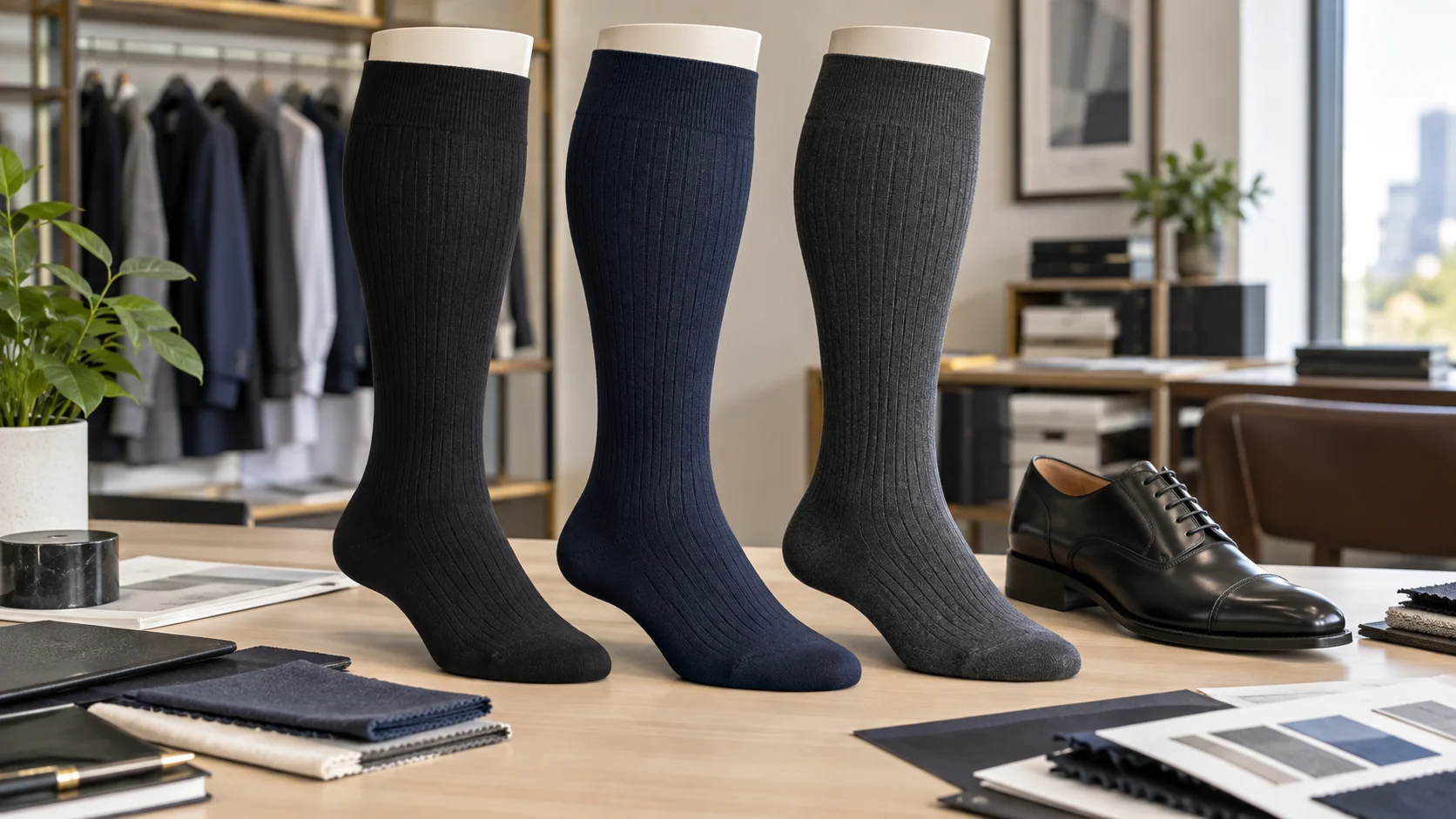
Concept visualization for product-development discussion. Confirm final knit, compression, sizing and manufacturing feasibility through approved samples.
Dress compression socks serve buyers who want a product that can be worn with office uniforms, formal trousers and business footwear without looking like a sports sock. The commercial opportunity is clear, but the style is more than an athletic sock in black. Fine appearance, shoe fit, calf capacity and pressure performance have to work together.
Define the channel before choosing the construction
A corporate-uniform program, men's dress retailer, pharmacy and e-commerce brand may all describe the product differently. Confirm intended footwear, dress code, climate, daily wear time and target customer measurements before sampling. These details affect thickness, rib scale, foot cushioning, colors and packaging.
Use factual positioning such as fine-gauge ribbed surface, wide-calf size range and formal color palette. Avoid promising a medical outcome unless the finished product, evidence and destination-market rules support it.
Fine-gauge appearance still needs recovery
A smoother, thinner knit can look appropriate with formal clothing, but reducing bulk may also affect opacity, durability and stretch recovery. The calf area must expand to the specified range and return without bagging at the ankle. Ask for side-by-side samples rather than approving yarn from a loose swatch.
Subtle vertical ribs can support a classic appearance and help disguise stretch variation. Rib spacing should be checked on both the lower and upper limits of the calf range because a narrow rib may open visibly when the fabric is extended.
Coordinate foot thickness with formal shoes
Dress shoes usually provide less internal volume than work boots or athletic shoes. Review toe seam profile, heel reinforcement, forefoot thickness and any cushioning inside representative footwear. A terry sole may be useful in selected channels, but it changes shoe fit and should not be added automatically.
For a lower-profile construction, compare the seamless-toe development guide. When cushioning is required, use the terry-sole guide to define zones and thickness.
Build sizes from foot, ankle, calf and length
A dress assortment should not rely on shoe size alone. Coordinate foot length, ankle circumference, calf circumference and heel-to-knee length. If customers have a small foot with a wider calf, consider combination sizes instead of enlarging the whole sock. The combination-size guide explains this approach.
Fit trials should include seated office wear as well as walking. Check whether the cuff remains flat, the ankle stays smooth and the heel remains aligned when the wearer alternates between sitting and standing.
Start the assortment with disciplined colors
Black, navy and charcoal are practical core options because they coordinate with common uniforms and formal trousers. Brown, beige and muted seasonal colors can follow when sales data supports them. Every dark shade should be checked for color consistency, crocking and wash performance.
Patterns should remain legible on the intended calf range. Small dots, micro-stripes or tonal ribs may be easier to control than large motifs. Test logo placement under stretch and avoid a mark that becomes distorted at the upper size boundary.
OEM sample approval checklist
- Confirm the intended shoe type and maximum foot thickness.
- Measure foot, ankle, calf, cuff and finished leg length.
- Inspect rib alignment, opacity and color under stretch.
- Verify toe seam, heel placement and reinforcement.
- Test cuff comfort during seated and standing wear.
- Confirm the agreed pressure test method for every planned size.
- Repeat appearance, color and recovery checks after laundering.
Wholesale packaging and photography
Packaging should make the extended calf range easy to find while keeping the front panel appropriate for the channel. Include the full size chart, fiber content, care instructions, country-specific labeling and a clear explanation of the dress construction. Online imagery should show the fine knit, cuff, foot profile and stretched appearance on the intended size range.
Buyers can review our men's compression socks, wide-calf program and private label options, or submit a specification through the quote form.
FAQ
What makes a compression sock suitable for dress wear?
A refined surface, controlled thickness, formal color and shoe-compatible foot construction should be combined with the approved size and pressure specification.
Should wide calf dress socks use only shoe size?
No. Use foot length together with ankle, calf and heel-to-knee measurements.
Which colors should a wholesale range start with?
Black, navy and charcoal are practical core colors. Add other colors after validating demand and color performance.
Can an athletic sock simply be made thinner?
No. Yarn and stitch changes can affect recovery, opacity and pressure, so the finished dress construction must be tested.