
Direct answer
There is no universal ranking of wide calf compression sock manufacturers that fits every buyer. The right supplier is the one that can convert a target calf range, compression specification and sales-channel requirement into a repeatable product. Buyers should compare demonstrated plus size experience, sampling discipline, test capability, private label support, quality records and communication rather than selecting only the lowest quotation.
1. Look for real plus size product engineering
Ask the manufacturer to explain how regular, wide calf and extra wide constructions differ. A credible answer should cover ankle-to-calf grading, heel and foot proportions, leg length, cuff circumference and stretch recovery. Simply enlarging a standard sock can create tight cuffs, loose ankles, excess fabric or unstable compression.
Request an example size chart and ask where each measurement is taken. For a broad range such as 2XL-7XL, confirm whether one construction covers all sizes or whether machine settings, yarn tension or grading rules change. Our ankle, calf and foot grading guide lists the measurements buyers should discuss.
2. Confirm who controls knitting and production
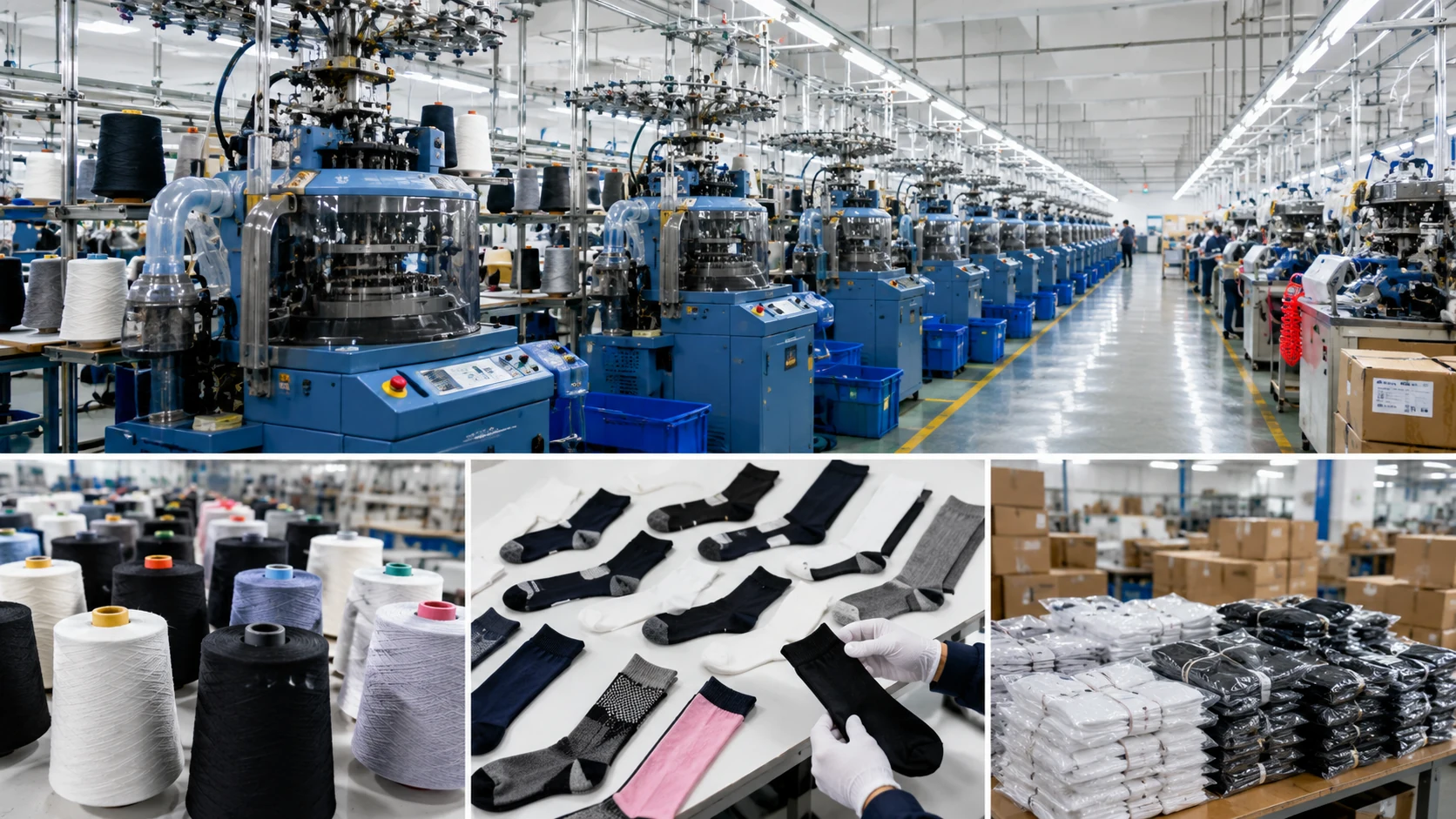
Understand whether the supplier operates the knitting process directly, coordinates partner factories or acts only as an exporter. Any model can work, but responsibility must be clear. Ask who creates the first sample, who adjusts machine settings, who purchases yarn, who inspects finished goods and who approves packaging.
A useful factory discussion should include available machine gauges, production capacity, yarn-lot management and how repeat orders are matched to approved samples. Buyers can also request recent factory photos, a video call or a third-party audit when the order value justifies it.
3. Review compression testing and claim control
The supplier should be able to discuss the intended pressure range and how finished socks are checked. Ask what equipment or external laboratory is used, which sizes are tested and what tolerance is applied. Testing only a standard size may not describe performance at the largest calf range.
Manufacturers should not encourage unsupported medical claims. The buyer remains responsible for destination-market requirements, but an experienced supplier can provide product specifications, fiber content and available test documents for review. Read the compression level wholesale guide before finalizing label language.
4. Compare the sample-development process
A good supplier asks questions before knitting: target country, wearer measurements, use case, pressure level, material, colors, pattern, logo method and package format. Be cautious when a quotation and production promise are issued without clarifying these points.
Ask how many sample rounds are included, how revisions are documented and whether the smallest and largest sizes can be tested. The approved sample should be supported by a measurement sheet, color reference and packaging specification. This record becomes the standard for bulk inspection.
5. Check OEM and private label capability
Private label support can include knitted or printed logos, custom colors, all-over patterns, size labels, care labels, retail cards, pouches, boxes, barcode stickers and carton marks. Confirm which operations are completed in-house and which require outside suppliers because that affects MOQ, lead time and color control.
Packaging is part of product engineering. The sock must fit the proposed fold and package without excessive compression or presentation problems. Marketplace buyers should also confirm label placement, pack quantity and warehouse requirements before bulk packing begins.
6. Evaluate MOQ, capacity and timeline together
A low MOQ can be useful for a market test, but it should not be considered separately from color minimums, size assortment and packaging minimums. Ask for a written breakdown by style, color, size and pack format. A supplier may accept a small sock quantity while a custom pouch or printed box requires a larger order.
Review sample time, material purchasing time, bulk knitting, finishing, inspection and packaging as separate stages. Also ask what happens during peak production periods and how the factory handles a failed inspection or late packaging component.
7. Ask for a practical quality-control plan
The inspection plan should include size measurements, visual appearance, toe closure, cuff condition, stretch recovery, color and pattern consistency, compression checks where required, pair matching, labeling and carton assortment. For repeat orders, compare current production with a sealed approval sample.
Traceability is especially useful when several sizes look similar after packing. Size identification, production batches and carton lists should allow a problem to be isolated instead of affecting the entire shipment. The bulk-order quality control guide provides a fuller checklist.
8. Score communication quality
Good communication is specific and documented. The supplier should summarize decisions, identify open points and explain the effect of changes on cost or lead time. Fast replies are helpful, but accurate technical answers are more important than speed alone.
Send the same brief to shortlisted suppliers and compare the questions they ask. A manufacturer that notices missing calf measurements or an unrealistic pack plan may be more valuable than one that immediately confirms every request.
Shortlist scorecard for B2B buyers
- Wide calf and extra wide size-development evidence.
- Clear compression specification and testing process.
- Representative samples across the proposed size range.
- Documented yarn, color, artwork and packaging approval.
- Bulk inspection and repeat-order traceability.
- Transparent MOQ, capacity, timeline and subcontracting.
- Export documents and compliance support for the target market.
Internal sourcing path
Start from the homepage, compare custom compression socks, review wide calf compression socks, then send the same technical brief to each shortlisted supplier before choosing a sample partner.
FAQ
Should buyers choose a trading company or a factory?
Both can work. The important point is knowing who controls sampling, production, inspection, corrective action and communication. Ask for a clear responsibility map before placing the order.
What should I ask a manufacturer first?
Start with size-chart capability, calf range, compression level, material, MOQ, sample process, test records, packaging and production lead time. A quotation without these details is difficult to compare fairly.
How many suppliers should reach the sample stage?
Many buyers compare several written quotations but sample with a smaller shortlist. Sampling two or three serious candidates can reveal differences in fit, communication and revision control without creating an unmanageable review process.