
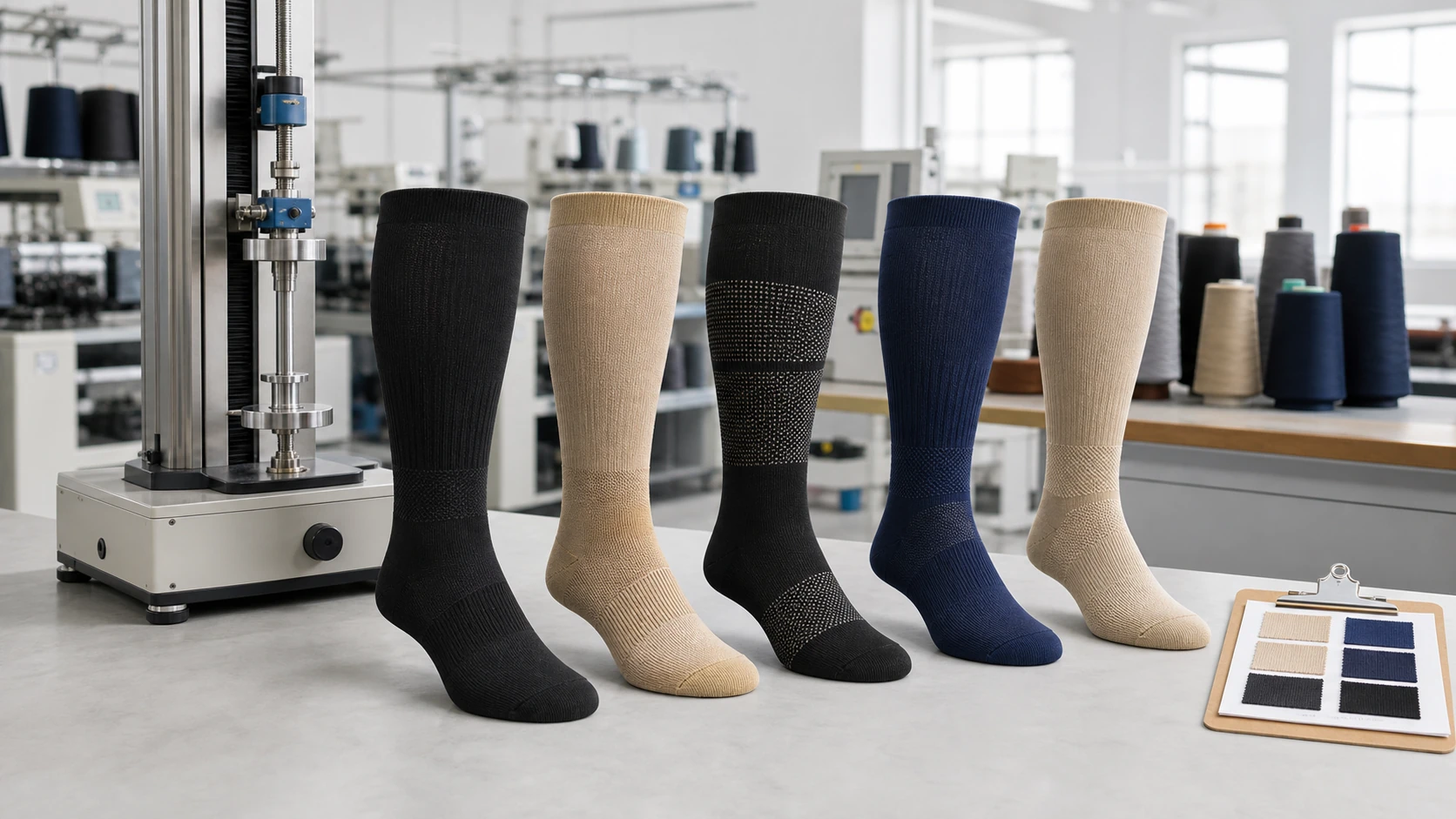
Compression level is one of the first specifications buyers discuss, but a number on a package does not describe the whole product. Fit, ankle-to-calf grading, yarn recovery and test method all affect how the sock performs on a plus size leg.
Wholesale buyers should define the intended channel and use case before requesting samples. Everyday wellness, travel, workwear and professionally directed products may need different specifications, documentation and claims.
What buyers should define before sampling
A complete brief gives the factory a measurable target and reduces revisions. Confirm these points before treating a sample as ready for approval:
- Target compression range and the method used to verify it.
- Measurement location along the leg.
- Body-size range covered by each sample.
- Intended retail channel and destination market.
- Permitted packaging and listing claims.
- Required reports, labeling or professional review.
Match the compression brief to the channel
A general retail or travel line is often positioned differently from a medical-supply program. Buyers should avoid choosing a higher number simply because it sounds more effective. Stronger compression can increase donning difficulty and may require more careful guidance.
Start with the customer, use case and selling environment. Then align the product specification, instructions and claims with qualified advice for the destination market.
Fit and pressure must be developed together
A pressure target cannot compensate for poor grading. If the ankle is loose or the calf is overstretched, the wearer may not experience the intended profile even when a laboratory sample meets a nominal range.
Ask how the factory validates different sizes and whether the largest calf size is tested separately. Repeat tests when yarn, construction or sizing changes.
Keep claims accurate and supportable
Packaging should state only specifications that the product and available documentation support. Avoid disease-treatment promises or broad medical claims without appropriate evidence and regulatory review.
For B2B sales, keep a technical file with the approved specification, reports, artwork and change history. This makes repeat orders and buyer questions easier to manage.
Sample approval checklist
Use the approved sample as a production reference, not only a sales photo. Record the results of the following checks and retain the final version:
- Review the pressure test method and sample size.
- Compare results across at least two relevant sizes.
- Wear-test donning, cuff comfort and ankle stability.
- Confirm that packaging language matches available evidence.
- Check local labeling requirements before printing.
- Retest after any material or construction change.
OEM and commercial planning
Use compression level as one decision point inside a complete product brief. The brief should also include calf range, material, cuff, toe style, care instructions and intended claims. Buyers selling across several countries may need market-specific artwork or documentation, so confirm these requirements early.
Buyers can compare related styles in Our Products, review private label compression socks capability and share their target sizes, quantities and packaging through the contact form.
Common mistakes to avoid
- Choosing the highest compression number without a channel strategy.
- Assuming one test result represents every size.
- Changing yarn without retesting.
- Making medical claims based only on supplier wording.
- Ignoring donning difficulty for extra-wide calves.
Final recommendation
Select compression levels through a documented product and compliance process. The strongest wholesale program is the one that balances verified specifications, usable fit and accurate communication.
Specifications and claims should be confirmed for the product, sales channel and destination market before ordering or publishing customer-facing materials.
FAQ
Does a higher compression level always mean a better product?
No. The appropriate level depends on the intended user, channel, fit and professional or regulatory requirements.
Should every plus size be pressure tested?
The testing plan should represent the size range, especially sizes where construction or stretch changes significantly.
Can a factory provide medical claim advice?
A factory can provide product data, but buyers should obtain qualified regulatory and medical guidance for claims in their destination market.
What changes can affect compression performance?
Yarn, knitting tension, size grading, cuff construction, finishing and washing performance can all affect the result.