
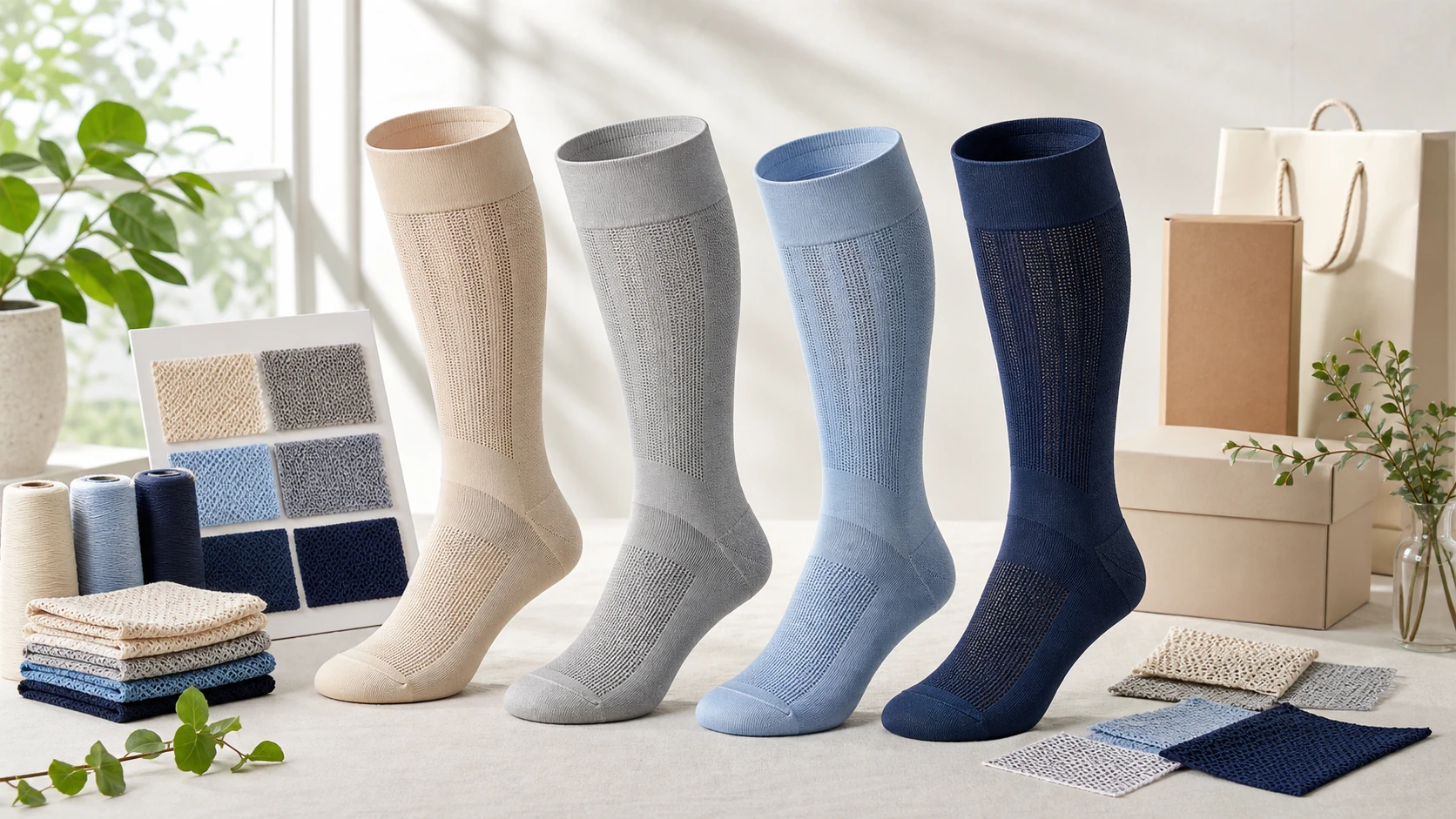
Summer customers often want a lighter feel without losing the structure expected from a compression sock. Buyers need to balance yarn weight, ventilation, opacity, recovery and durability rather than relying on the word breathable alone.
A warm-weather line can also expand seasonal color and travel positioning, but the same calf-fit and compression validation still applies.
What buyers should define before sampling
A complete brief gives the factory a measurable target and reduces revisions. Confirm these points before treating a sample as ready for approval:
- Target climate and use case.
- Yarn composition and fabric weight.
- Ventilation-zone placement.
- Opacity and color requirements.
- Compression and recovery specification.
- Care and drying instructions.
Use structure, not only lighter yarn
Reducing material can change opacity, durability and pressure. Ventilation zones may be placed where they improve comfort without weakening critical areas.
Ask for side-by-side samples that use the same size and compression brief. This makes it easier to compare hand feel and performance.
Select colors for warm-weather channels
Beige, light gray, white and soft blue can support summer and travel stories, while black and navy remain useful core colors. Light shades need close review for coverage, staining and color consistency.
Patterns should be checked on stretched wide calves because open structures and light yarns can change their appearance.
Test comfort under realistic conditions
Wear testing should include warm indoor or outdoor conditions where practical. Review moisture feel, cuff comfort, shoe compatibility and whether the fabric becomes transparent or distorted.
Wash and drying tests are important because summer products may be cleaned more frequently.
Sample approval checklist
Use the approved sample as a production reference, not only a sales photo. Record the results of the following checks and retain the final version:
- Compare fabric weight and opacity.
- Inspect ventilation zones under stretch.
- Wear-test in the target climate.
- Check drying and wash recovery.
- Review light-color consistency.
- Confirm that breathable claims match the construction.
OEM and commercial planning
Position the line around lightweight comfort, warm-weather use and measured wide calf fit. Avoid absolute claims such as sweat-free. Start with a small color capsule and use seasonal sales data before expanding the range.
Buyers can compare related styles in Our Products, review private label compression socks capability and share their target sizes, quantities and packaging through the contact form.
Common mistakes to avoid
- Making the fabric lighter without retesting compression.
- Using large mesh zones that weaken recovery.
- Ignoring opacity on larger calves.
- Launching too many pale colors at once.
- Making unverified moisture or cooling claims.
Final recommendation
A successful summer line feels lighter because material and structure are engineered together. Keep the fit system stable while testing ventilation, opacity and wash performance.
Specifications and claims should be confirmed for the product, sales channel and destination market before ordering or publishing customer-facing materials.
FAQ
What makes a compression sock suitable for summer?
A lighter construction, suitable yarn, controlled ventilation and practical drying can support warm-weather comfort.
Do mesh zones reduce compression?
They can affect structure, so placement and performance should be tested in the final sample.
Which colors are suitable for summer lines?
Light neutrals and soft colors can work, but core black and navy may still lead sales.
Should summer socks use a different size chart?
If material or construction changes fit and stretch, the range should be revalidated rather than copied automatically.