
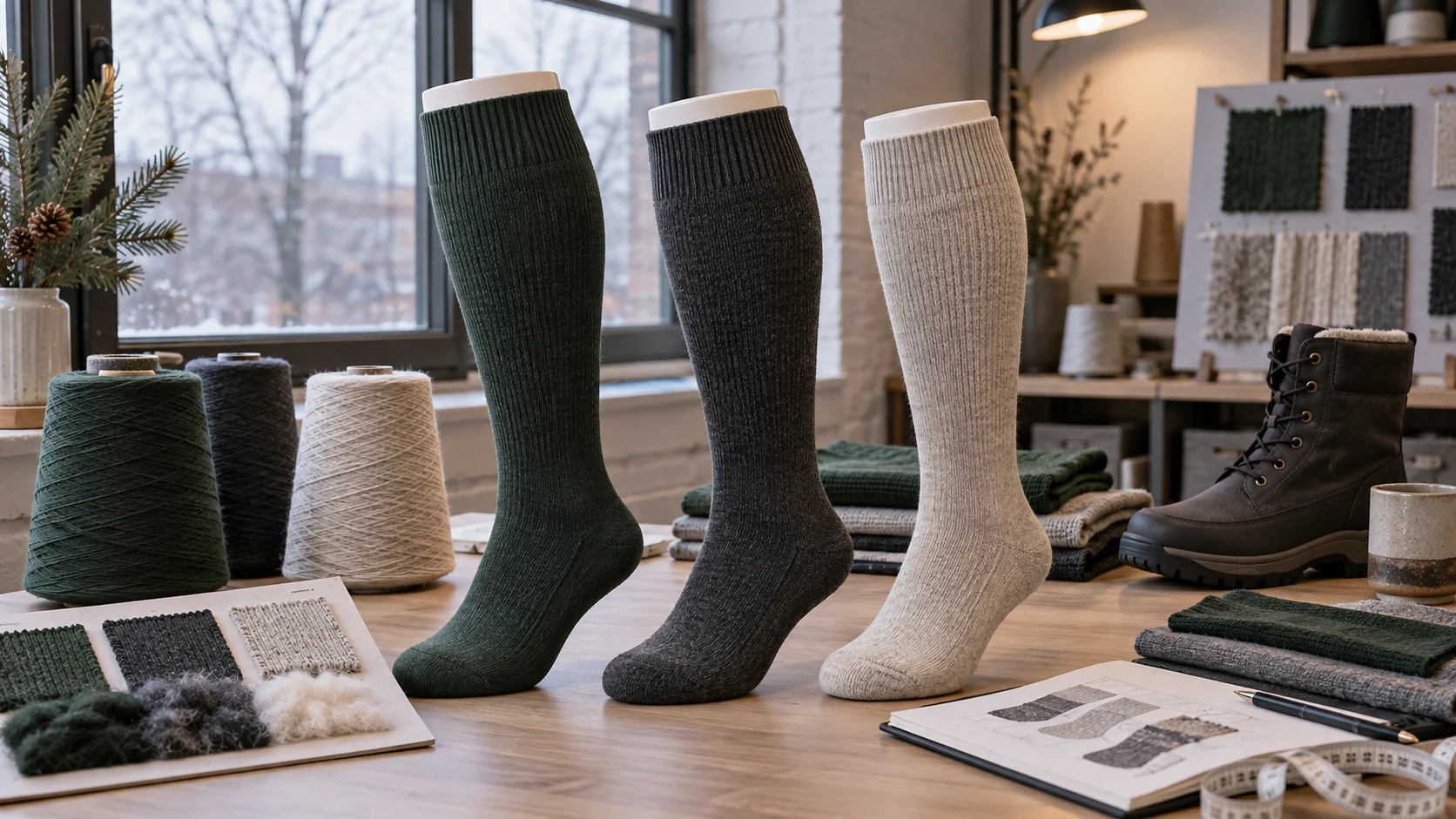
Concept visualization for product-development discussion. Confirm fiber availability, final composition, compression and manufacturing feasibility before presenting this style as available.
Merino-blend compression socks can give winter, outdoor and premium lifestyle collections a clear material story. For plus size programs, however, the brief must go beyond “add wool.” Fiber percentage, yarn count, knit density, wide-calf stretch and wash recovery all affect the finished product.
Why a blend is usually a development decision
Wool contributes its own hand feel and moisture behavior, while elastic and supporting fibers help create recovery and a stable compression structure. The suitable blend depends on the target pressure, thickness, durability and care method. Buyers should not assume that the highest wool percentage produces the best compression sock.
Request a precise fiber composition for the finished sample and keep supplier documentation with the product file. Generic words such as “wool feel” or “merino style” should not replace an accurate label.
Control bulk before planning winter footwear
A winter sock can feel warmer through yarn selection, construction or added cushioning, but extra bulk may reduce space inside shoes. Define whether the target customer will wear business shoes, everyday boots, work boots or outdoor footwear. Test the sample in representative footwear at the largest planned foot size.
If terry cushioning is included, specify whether it covers the full foot or selected zones. Review the terry-sole OEM guide before combining two material changes in one approval round.
Revalidate wide-calf grading with the final yarn
Do not copy a summer or nylon-rich size chart automatically. A wool blend may change stretch, surface friction and recovery. Measure foot, ankle, calf, cuff and finished height on the actual sample, then fit test wearers near the lower and upper boundaries.
Check whether the fabric becomes too open or transparent on the widest calf and whether the ankle remains smooth. Record donning and removal effort because a textured yarn can feel different even when relaxed dimensions appear similar.
Separate material facts from comfort claims
Fiber composition is a measurable product fact. Claims such as temperature regulating, odor resistant or moisture wicking require evidence appropriate to the finished construction and market. Do not copy general fiber marketing language directly onto packaging.
A practical private label page can state the verified composition, knit structure, target season, size range and care instructions. For a broader comparison of yarn choices, use the plus size compression sock material guide.
Plan colors around yarn and lot control
Charcoal, black, navy, forest green and oatmeal can form a focused winter capsule. Natural-looking lighter shades may show fiber variation, while deep shades need colorfastness and lot-consistency checks. Approve color on the final blend rather than on a different yarn base.
Keep the first assortment manageable. Multiple sizes, colors and compositions can multiply the number of production combinations quickly, especially when the buyer needs several packaging languages.
Sample and laboratory checklist
- Verify final fiber composition and supporting documents.
- Measure fabric weight and finished dimensions by size.
- Confirm pressure using the agreed method and test points.
- Wear-test in the intended footwear and climate.
- Check pilling, abrasion, shrinkage and stretch recovery.
- Review colorfastness and shade consistency.
- Confirm washing, drying and storage instructions.
- Repeat key checks after the agreed laundering cycles.
Packaging and seasonal buying timeline
Winter packaging can highlight the documented blend, wide-calf chart, thickness category and intended footwear without making unsupported performance claims. Buyers should plan samples early enough to evaluate wear and laundering before the seasonal order window.
Confirm yarn lead time, color availability, sample stages, MOQ and production schedule with the supplier. Special yarns may have different sourcing constraints from regular compression-sock materials.
Buyers can compare plus size compression socks, review private label development, or submit the target blend and sizing through the quote form.
FAQ
Do merino compression socks need to be 100 percent wool?
No. A documented blend may be needed to balance wool content with stretch, recovery, durability and pressure performance.
Does a thicker winter sock provide the same compression?
Do not assume so. The finished winter construction needs its own fit and pressure testing.
What should buyers verify about merino claims?
Verify composition, supplier documents, labeling rules and evidence for any sourcing or performance claims.
Which colors suit a winter range?
Charcoal, black, navy, forest green and oatmeal can form a focused capsule, subject to yarn availability and color approval.