
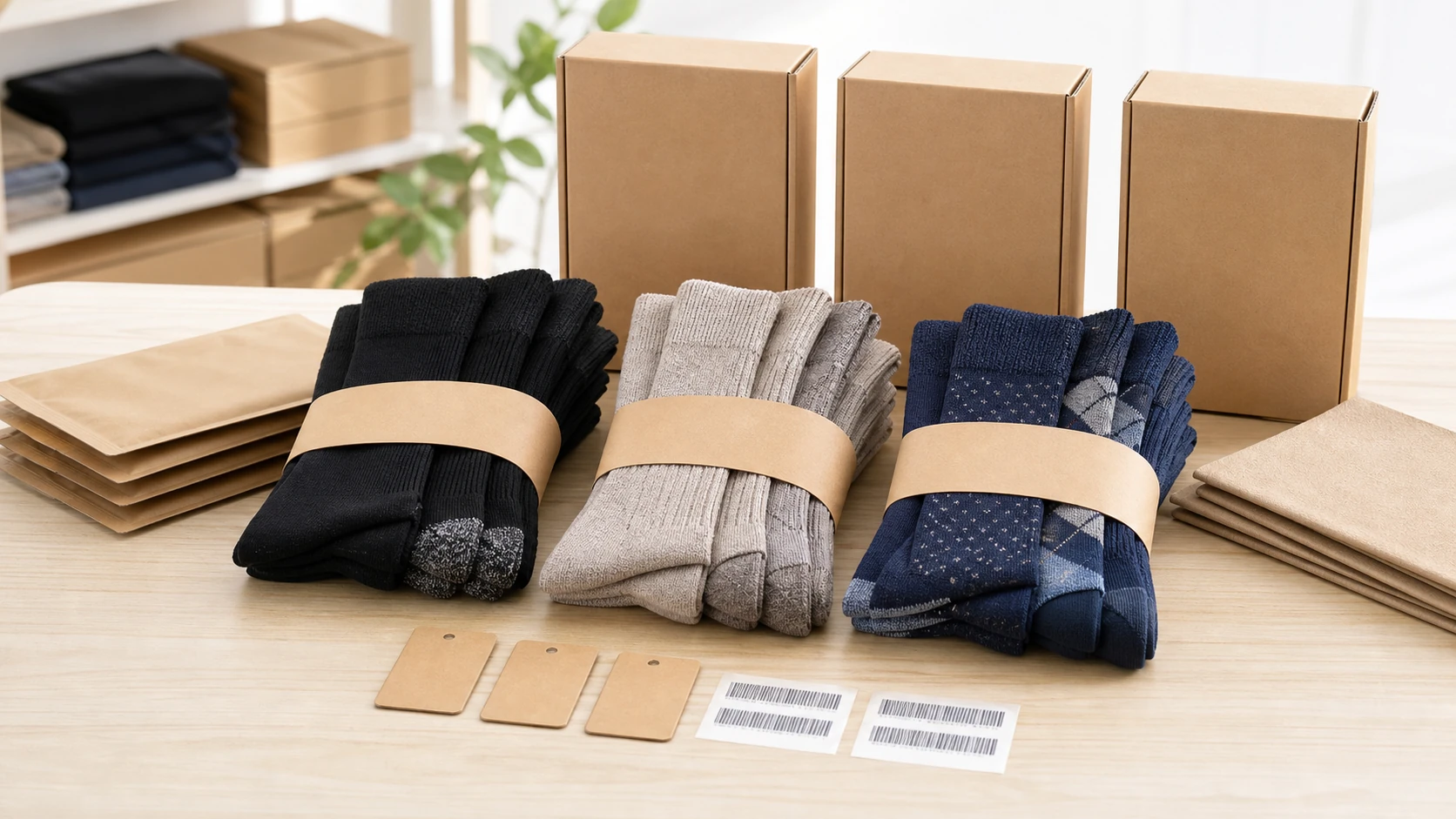
A three-pack can increase perceived value and give customers enough pairs for rotation. It can also multiply quality and inventory problems if the pairs do not match in size, compression feel or construction.
Buyers should define the pack as one product with a controlled assortment. Each pair needs the same approved fit standard even when colors or patterns vary.
What buyers should define before sampling
A complete brief gives the factory a measurable target and reduces revisions. Confirm these points before treating a sample as ready for approval:
- Pack color or pattern combinations.
- Size and compression consistency across all three pairs.
- Folding, banding, pouch or box format.
- Pack-level barcode and SKU.
- Pair and pack inspection method.
- Wholesale and retail price architecture.
Choose an easy-to-understand combination
A practical pack may contain three core colors, three neutrals or one core plus two patterns. Avoid combinations where one unpopular design makes the complete pack difficult to sell.
Name the combination clearly and photograph all pairs. Customers should know exactly which colors they will receive.
Keep fit consistent across colors
Different yarn colors or patterns can feel slightly different if production settings are not controlled. Measure and wear-test representative pairs from each option.
The size chart should apply to the whole pack. If one design requires a different construction, it may belong in a separate SKU.
Engineer packaging for fulfillment
A paper band can create a low-material presentation, while a pouch or box offers more protection and printable area. The pack should stay together through warehousing and parcel shipping.
Make size and color information visible without opening the package. Confirm the pack barcode is not confused with any pair-level code.
Sample approval checklist
Use the approved sample as a production reference, not only a sales photo. Record the results of the following checks and retain the final version:
- Compare measurements across all three pairs.
- Check color and pattern against the approved combination.
- Test the complete packed dimensions and weight.
- Scan pack and pair barcodes.
- Inspect pair count and size consistency.
- Photograph the exact customer-facing pack.
OEM and commercial planning
Calculate margin using three pairs, pack assembly, packaging, fulfillment weight and expected promotional discounts. A three-pack should create a clear value story without making the single-pair offer look incorrectly priced. Keep pack inventory aligned with the availability of every component color.
Buyers can compare related styles in Our Products, review private label compression socks capability and share their target sizes, quantities and packaging through the contact form.
Common mistakes to avoid
- Using one weak color to clear inventory.
- Mixing pairs with different fit or compression feel.
- Hiding the color combination from customers.
- Using confusing pair and pack barcodes.
- Ignoring the larger shipping dimensions.
Final recommendation
Build the three-pack around a coherent color story and strict pair consistency. A value pack succeeds when it is simple to understand, reliable to replenish and easy to fulfill.
Specifications and claims should be confirmed for the product, sales channel and destination market before ordering or publishing customer-facing materials.
FAQ
What colors work well in a three-pack?
Three neutrals, coordinated core colors or one core plus two proven patterns are common approaches.
Should all three pairs use the same construction?
Yes, unless the pack is intentionally sold as a mixed-style set with separate specifications and clear customer information.
Does a three-pack need its own barcode?
Usually the customer-facing pack needs a unique SKU and barcode distinct from any individual pair.
How should packs be inspected?
Check pair count, size, color, measurements, packaging integrity, labels and barcodes using a documented sampling plan.