
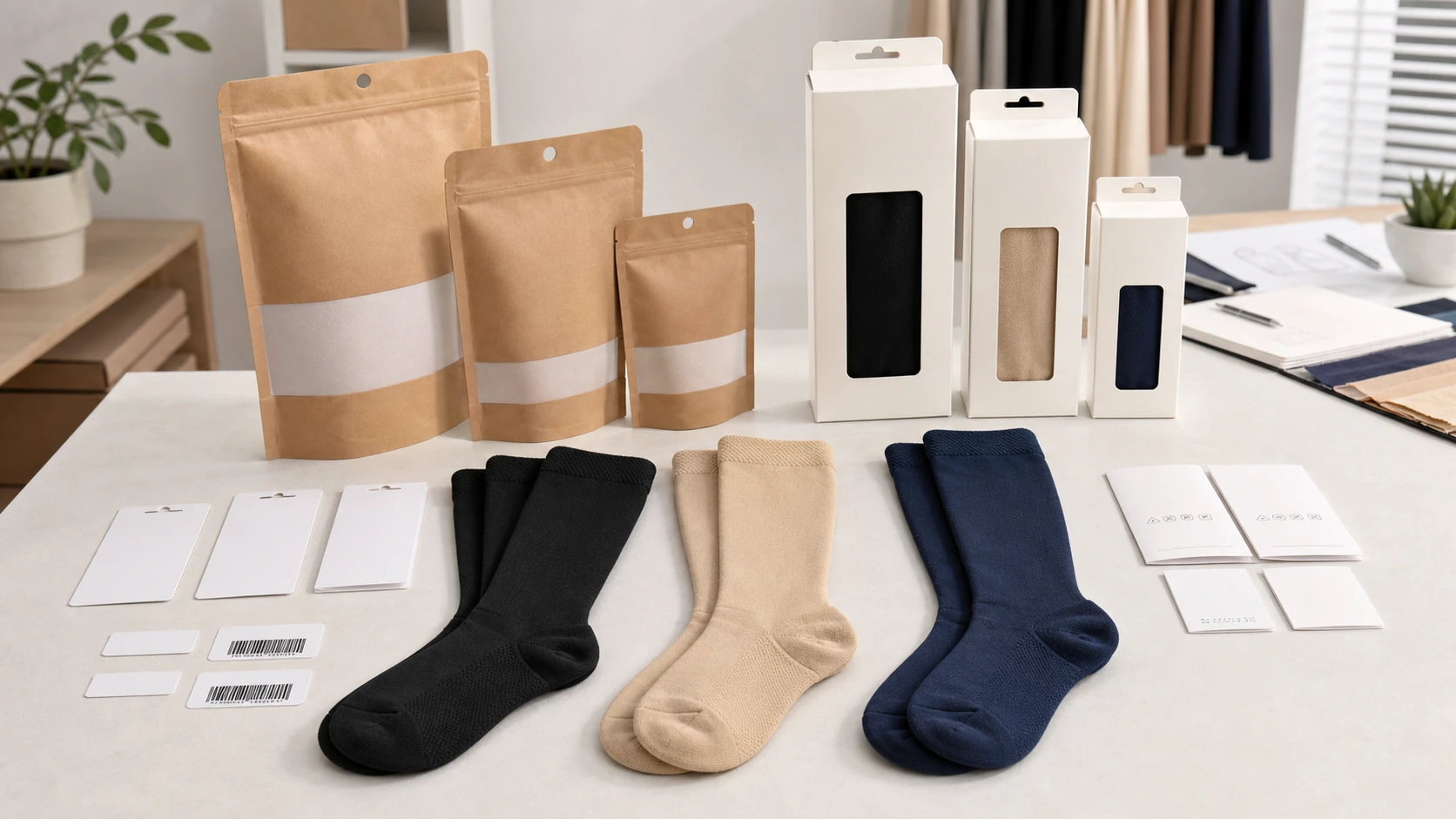
Packaging has to sell the product and prevent a sizing mistake. In the plus size category, the front and back panels should make calf range, compression specification and style easy to identify.
Good packaging also survives warehousing, fulfillment and customer handling. Buyers should choose the format after considering retail display, parcel shipping, return handling and packaging MOQ.
What buyers should define before sampling
A complete brief gives the factory a measurable target and reduces revisions. Confirm these points before treating a sample as ready for approval:
- Brand, product name and style identifier.
- Size, calf range, ankle range and shoe-size information.
- Compression specification and permitted claims.
- Material composition and care instructions.
- Barcode, SKU, country and company information.
- Pack quantity and fulfillment labels.
Choose the right packaging format
A clear or printed pouch is compact and suitable for many e-commerce programs. A retail box or hang card can create stronger shelf presence but may require higher printing minimums and more shipping space.
For a market test, stock packaging with branded labels can reduce inventory risk. Confirm that the format protects the sock and leaves enough room for a clean fold.
Make sizing impossible to miss
Show the size and color on more than one surface where practical. Include a clear chart or a QR route to detailed sizing, but do not make the customer depend on a QR code for essential fit information.
Use the same measurement ranges online and on-pack. Calf circumference should be prominent for wide and extra-wide styles.
Control claims and artwork versions
Review every performance, material and medical statement before printing. Claims must match the approved product, available evidence and destination-market requirements.
Use version numbers and final proof approval. When the size chart or material changes, old packaging should not be used automatically.
Sample approval checklist
Use the approved sample as a production reference, not only a sales photo. Record the results of the following checks and retain the final version:
- Pack the real sock into the proposed format.
- Check size and color visibility.
- Scan all barcodes.
- Proofread material, care and company details.
- Compare the chart with the approved sample specification.
- Test master-carton quantity and labels.
OEM and commercial planning
Packaging should support the channel. Amazon and fulfillment programs may require barcode placement, bag warnings, prep standards or carton labels, while pharmacy and retail buyers may prioritize shelf readability. Confirm these needs before requesting a packaging quotation.
Buyers can compare related styles in Our Products, review private label compression socks capability and share their target sizes, quantities and packaging through the contact form.
Common mistakes to avoid
- Printing before the size chart is final.
- Using packaging that hides the size sticker.
- Ordering a large custom box quantity for an untested SKU.
- Making unsupported medical claims.
- Forgetting fulfillment or carton-label requirements.
Final recommendation
Treat packaging as a controlled product component. Clear sizing, accurate claims and practical pack-out protect both conversion and operations.
Specifications and claims should be confirmed for the product, sales channel and destination market before ordering or publishing customer-facing materials.
FAQ
What packaging is suitable for a small first order?
Stock pouches or boxes with branded labels and inserts can reduce printed-packaging minimums.
Should calf range appear on the front?
For a wide calf product, prominent calf-range information helps customers identify the correct item quickly.
Can a QR code replace a size chart?
It can provide additional detail, but essential sizing should remain visible without requiring another device or connection.
When should barcodes be tested?
Test them on final printed samples before bulk packaging production and again during inspection.