
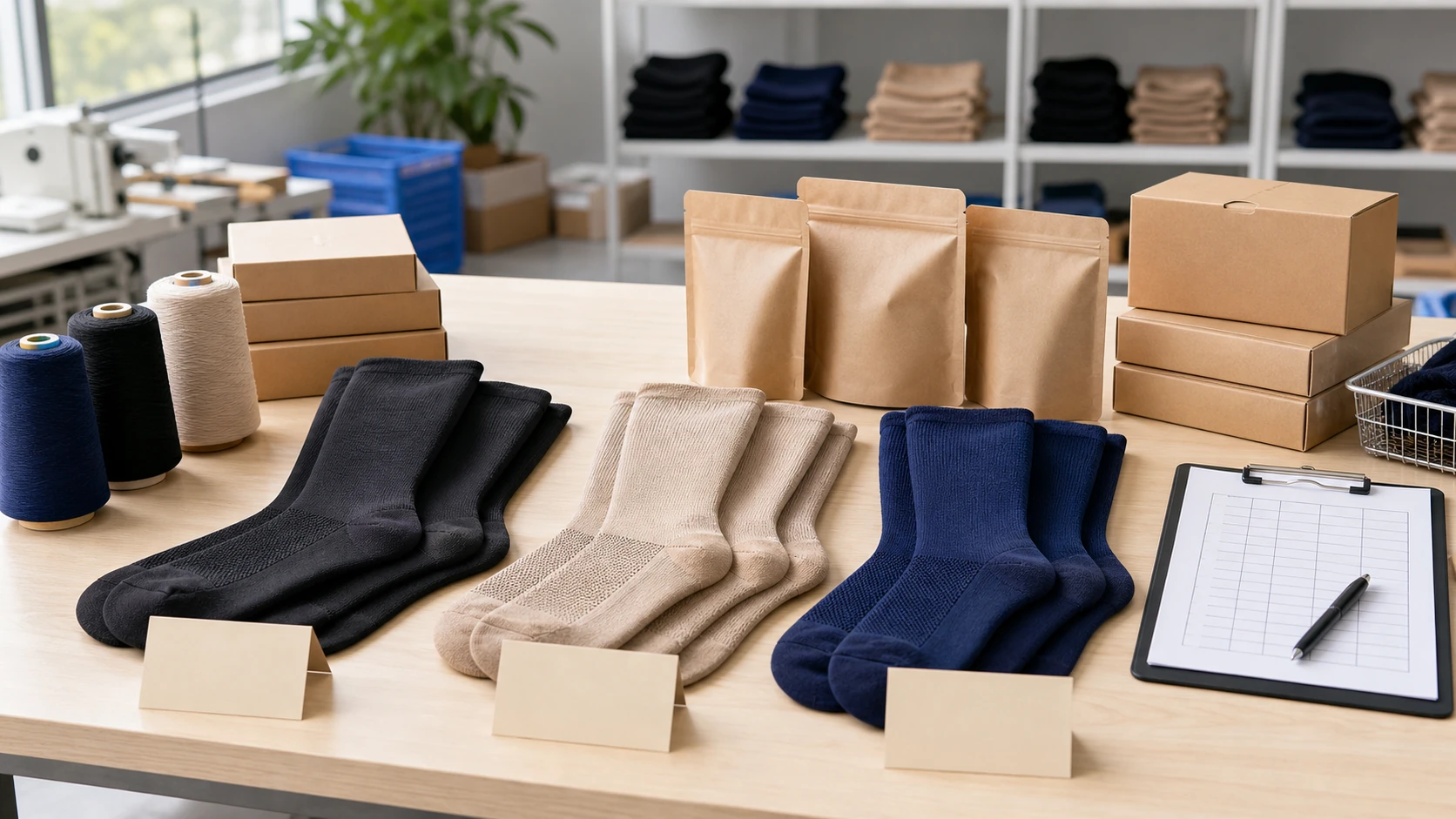
MOQ is not one universal number. It is influenced by yarn preparation, machine setup, color, size distribution, logo method, packaging and whether the buyer selects an existing construction or a new development.
For plus size compression socks, a low total quantity can still become complex when it is divided across seven sizes and several colors. Buyers need to understand MOQ at the style, color and size level.
What buyers should define before sampling
A complete brief gives the factory a measurable target and reduces revisions. Confirm these points before treating a sample as ready for approval:
- MOQ per custom style.
- MOQ per color and whether stock yarn is available.
- Minimum quantity per size.
- Logo and pattern setup requirements.
- Packaging printing minimums.
- Sample, testing and setup charges.
Separate product MOQ from packaging MOQ
A factory may accept a small sock order while the printed box supplier requires a larger quantity. Ask for both numbers and decide whether blank packaging with labels is more practical for a first test.
Stock pouches, size stickers and branded inserts can reduce risk while preserving a professional presentation.
Build a realistic size ratio
Do not divide the order equally across 2XL-7XL without market evidence. Use sales data, competitor reviews, pre-orders or channel knowledge to create a starting ratio.
Keep enough quantity in core sizes to avoid early stock-outs, but reserve inventory for the larger edge sizes that define the plus size offer.
Use samples to control development cost
An existing base construction with custom colors or packaging usually requires less development than a new yarn, pattern, zipper or extra-wide grading system. Ask which elements can be sampled from current capability.
Confirm which sample fees can be credited against a bulk order and which tests create separate costs.
Sample approval checklist
Use the approved sample as a production reference, not only a sales photo. Record the results of the following checks and retain the final version:
- Request a written MOQ breakdown.
- Confirm whether MOQ applies per size, color or total style.
- Review packaging supplier minimums.
- Approve a size ratio before the purchase order.
- Identify stock versus custom yarn options.
- Confirm charges for samples, labels, testing and setup.
OEM and commercial planning
A lower MOQ is valuable only if the resulting assortment can sell. Start with core colors, a focused size range based on demand and packaging that does not lock the brand into excessive inventory. After sales data is available, expand patterns and specialized constructions.
Buyers can compare related styles in Our Products, review private label compression socks capability and share their target sizes, quantities and packaging through the contact form.
Common mistakes to avoid
- Comparing suppliers using one headline MOQ number.
- Ignoring the minimum per color or size.
- Ordering too many printed boxes for an untested product.
- Splitting a small order across too many SKUs.
- Choosing custom yarn before validating demand.
Final recommendation
Ask for a transparent MOQ structure and plan the first order around sellable SKUs. A focused launch often creates better data and lower risk than a very broad but shallow assortment.
Specifications and claims should be confirmed for the product, sales channel and destination market before ordering or publishing customer-facing materials.
FAQ
What is the custom MOQ for this manufacturer?
The standard custom MOQ shown by pluscompressionsocks is 200 pairs per custom style, subject to the final size, color, material and packaging brief.
Can packaging have a different MOQ from socks?
Yes. Printed boxes, pouches or cards may have their own supplier minimums.
How can buyers lower first-order risk?
Use core colors, a limited SKU plan, stock packaging with branded labels and an existing construction where appropriate.
Does every size need the same quantity?
No. A size ratio should reflect target-market demand while keeping the complete advertised range available.