
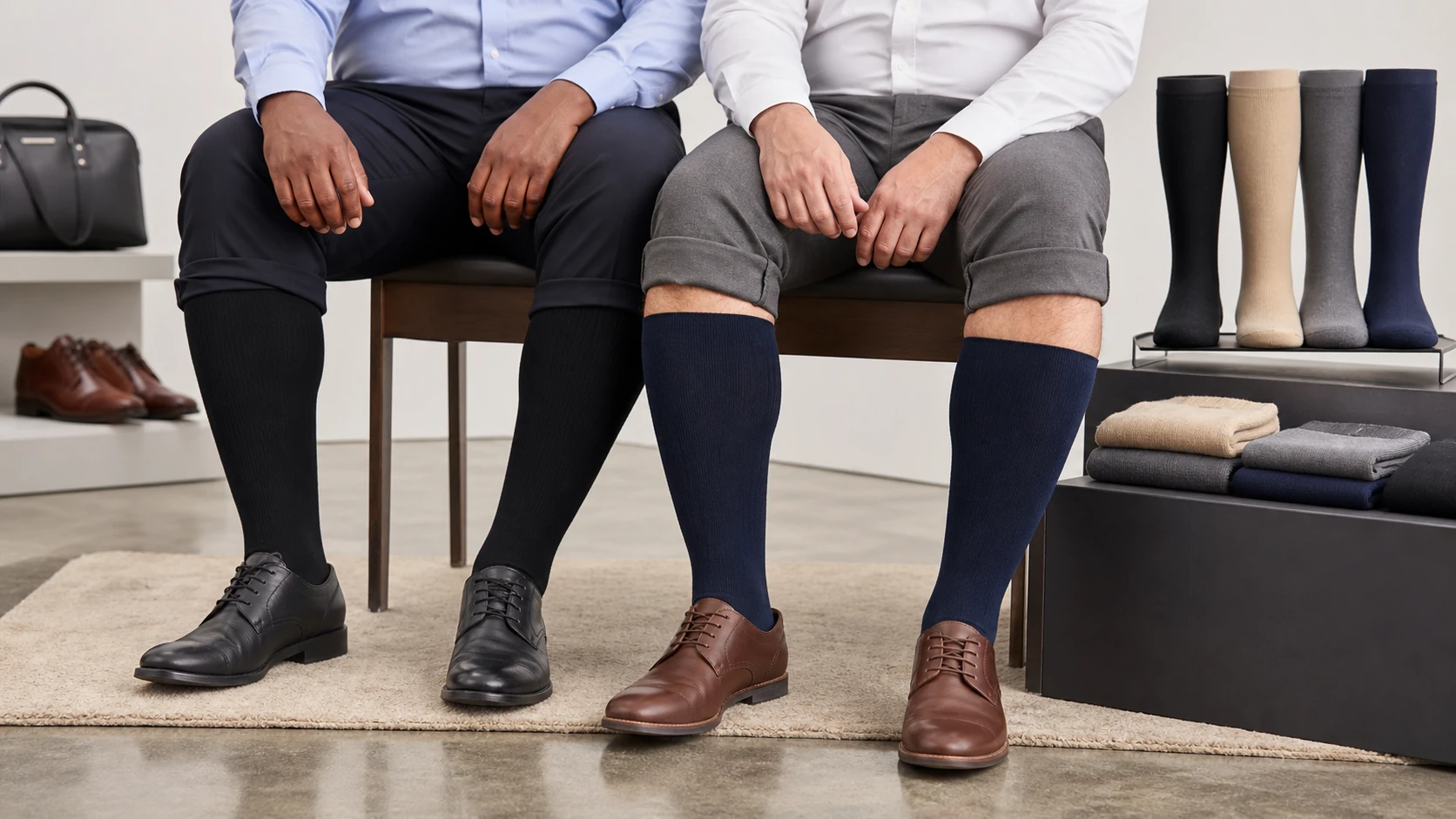
A men's plus size compression sock line should be built around real calf and foot measurements, not only enlarged unisex labels. Men's assortments often need broader foot ranges, practical colors and channel-specific styling.
The strongest first range is usually focused. Core sizes and colors create dependable inventory, while one or two differentiated options test demand without creating too many slow-moving SKUs.
What buyers should define before sampling
A complete brief gives the factory a measurable target and reduces revisions. Confirm these points before treating a sample as ready for approval:
- Target men's foot and shoe-size ranges.
- Calf and ankle ranges by size.
- Daily, travel, workwear or athletic use case.
- Compression and material specification.
- Core color and pattern plan.
- Single-pair, multi-pack and packaging strategy.
Start with core colors and clear uses
Black, navy, charcoal and neutral options work across office, travel and workwear channels. A subtle stripe or texture can add variety without limiting wearability.
Name products by use and fit. A customer should quickly understand whether the style is designed for daily wear, standing work, travel or sport.
Coordinate foot and calf grading
Larger shoe sizes do not guarantee larger calves, and large calves can appear across several foot sizes. Review the matrix instead of creating one oversized men's style.
Test heel position, toe space and leg length alongside calf fit. Excess foot fabric can reduce perceived quality even when the calf feels comfortable.
Choose materials for the channel
Smooth nylon blends support formal and performance looks, while softer blends can create a daily-comfort story. Workwear programs may prioritize durability, odor-management positioning and darker colors.
Any performance wording should match the actual material and testing. Comfort-focused copy is usually clearer than unsupported technical claims.
Sample approval checklist
Use the approved sample as a production reference, not only a sales photo. Record the results of the following checks and retain the final version:
- Fit-test representative foot and calf combinations.
- Check leg length on taller wearers.
- Review color under business and retail lighting.
- Test cuff stability during walking and sitting.
- Compare single-pair and multi-pack presentation.
- Confirm regional men's shoe-size conversions.
OEM and commercial planning
For wholesale launches, lead with two or three core colors and a size system that retailers can explain. Add brighter athletic or patterned styles after reviewing channel data. Multi-packs can work for value-oriented customers, but they need clear size and color labeling.
Buyers can compare related styles in Our Products, review private label compression socks capability and share their target sizes, quantities and packaging through the contact form.
Common mistakes to avoid
- Treating men's plus size as a larger unisex label.
- Offering many patterns before core colors are stocked.
- Ignoring longer feet and heel placement.
- Using only shoe size for selection.
- Making every channel use the same product story.
Final recommendation
Build the men's range around fit data and practical use cases. A concentrated assortment with reliable core inventory is easier for wholesalers to present and replenish.
Specifications and claims should be confirmed for the product, sales channel and destination market before ordering or publishing customer-facing materials.
FAQ
What colors should a men's wholesale line start with?
Black, navy, charcoal and other neutral colors are practical starting points for office, travel and workwear channels.
Can men's and women's sizing use the same calf chart?
Some unisex programs can, but foot length, styling and fit assumptions should be validated for the target market.
Are multi-packs suitable for men's compression socks?
Yes. They can support value and repeat use when the size, colors and compression specification are clearly labeled.
What should be checked for larger shoe sizes?
Check foot length, heel placement, toe space, leg length and how these dimensions interact with the calf range.