
Direct answer
Plus size compression socks are not simply regular compression socks with a larger size label. They normally require a broader foot, ankle and calf range, different grading rules, more cuff capacity and validation on representative larger legs. Regular styles can remain part of the same product family, but buyers should use separate specifications and size charts when the target measurements change substantially.
Size chart differences
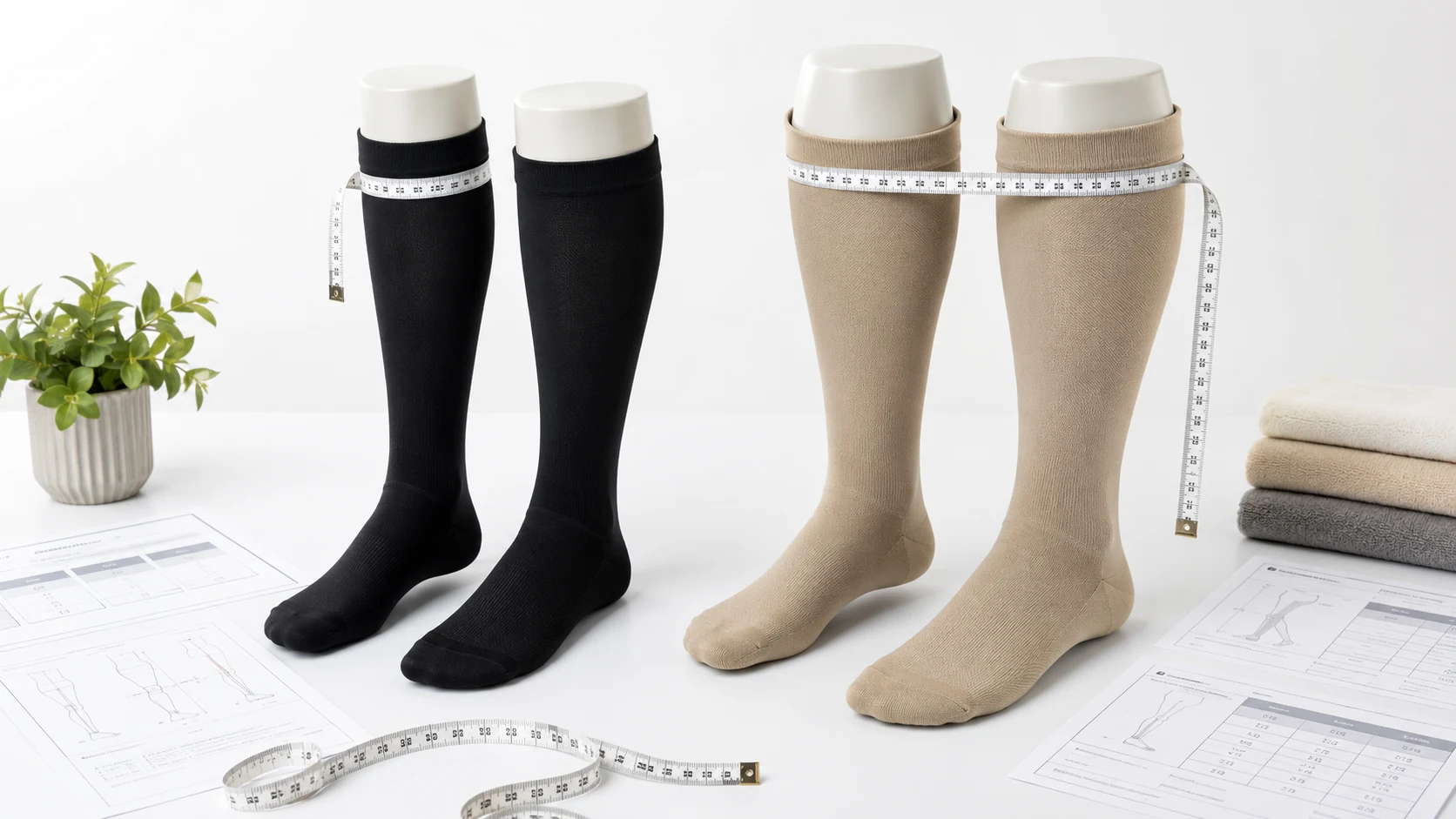
Regular compression socks often use shoe size as the primary selection tool, sometimes supported by ankle or calf measurements. That approach becomes less reliable when customers have a wider range of body proportions. A plus size chart should define foot length, ankle circumference, maximum calf circumference and heel-to-knee length.
Labels such as XL, 2XL and 7XL are brand-specific, so actual centimeters and inches should appear on the product page and package. Clear measurement instructions can reduce returns caused by customers choosing only from shoe size.
Construction differences
A standard sock cannot always be enlarged uniformly. Customers may need substantially more calf room without a proportionally longer foot. If every dimension is scaled together, the heel and toe can sit incorrectly. If only the upper leg is widened, the ankle may become loose or the compression transition may be uneven.
Plus size development can require revised stitch counts, knitting tension, elastic covering, heel placement, leg length and cuff construction. The factory should document how the pattern changes between sizes rather than relying on stretch alone to cover an extremely broad range.
Cuff comfort and donning
Regular cuffs may feel restrictive on a larger calf even when the sock can technically stretch over the leg. Plus size cuffs should distribute holding force without digging, folding or rolling. A wider band can help, but circumference and elastic recovery remain essential.
Donning is another product-design issue. A sock that is extremely difficult to open may receive poor reviews even if its pressure result is within specification. Buyers can evaluate easier-on knit structures, open toe options or zipper designs for specific customers while ensuring the finished product still meets the intended performance requirements.
Compression performance across sizes
The same yarn and machine program may produce different results when garment dimensions and leg circumference change. Buyers should ask how the pressure range is checked for the smallest and largest sizes. Do not assume that testing a regular medium size proves performance for an extended plus size.
Compression labeling and medical claims must be reviewed for the destination market. A plus size product should not claim stronger support merely because it fits a larger leg. The intended pressure range should be specified and verified separately.
Material and appearance
Both regular and plus size socks can use nylon-spandex, bamboo blends, cotton blends or specialty functional yarns. The difference is how those materials behave over a larger circumference. Patterns can open up, colors can look lighter and fabric can become more transparent when stretched.
Review samples on target calf forms or wearers, not only flat on a table. Check opacity, artwork proportion, recovery and pilling after washing. Our material comfort guide explains the key variables.
Customer complaints reveal the wrong size architecture
Regular socks often fail larger users through tight cuffs, roll-down, ankle wrinkles, short leg length, incorrect heel placement or difficult donning. These complaints should be categorized because each points to a different design adjustment.
For example, roll-down may involve calf range, cuff recovery and leg length rather than only band width. Review the roll-down fit guide before changing a construction.
How B2B buyers can plan both ranges
A retailer can keep a proven regular range and add a separate wide calf or plus size extension. Use different product codes and clear comparison charts while keeping brand colors, packaging hierarchy and compression positioning consistent. This makes the extended range feel intentional rather than like an afterthought.
Begin with core sizes and colors supported by customer data. Test black, skin tone or navy before multiplying patterns and multipacks. Once fit is stable, the same size system can support nurse, travel, open toe, zipper and seasonal variations.
OEM sample checklist
- Confirm body-measurement ranges for every size.
- Measure foot, ankle, calf, cuff and leg length.
- Test donning and long wear on representative users.
- Check pressure specification across critical sizes.
- Review pattern appearance and opacity while stretched.
- Repeat measurements after washing and recovery testing.
- Verify that package size charts match the approved product.
OEM planning
When planning a new product, start with plus size compression socks and compare the fit with wide calf compression socks. Send your target measurements, pressure level, material, style and packaging plan through the contact page.
FAQ
Are plus size compression socks the same as wide calf compression socks?
Not always. Wide calf focuses on calf circumference. Plus size can include the foot, ankle, calf and leg length together. The actual measurement chart is more reliable than either label.
Can regular compression socks be resized for plus size buyers?
Sometimes, but the development should test grading, pressure, stretch recovery, cuff comfort and heel position. Changing only the label or enlarging the pattern uniformly is not enough.
Should the plus size version use the same packaging?
The brand design can remain consistent, but the package may need different dimensions and a more detailed size chart. Never reuse regular-size measurements on plus size artwork.