
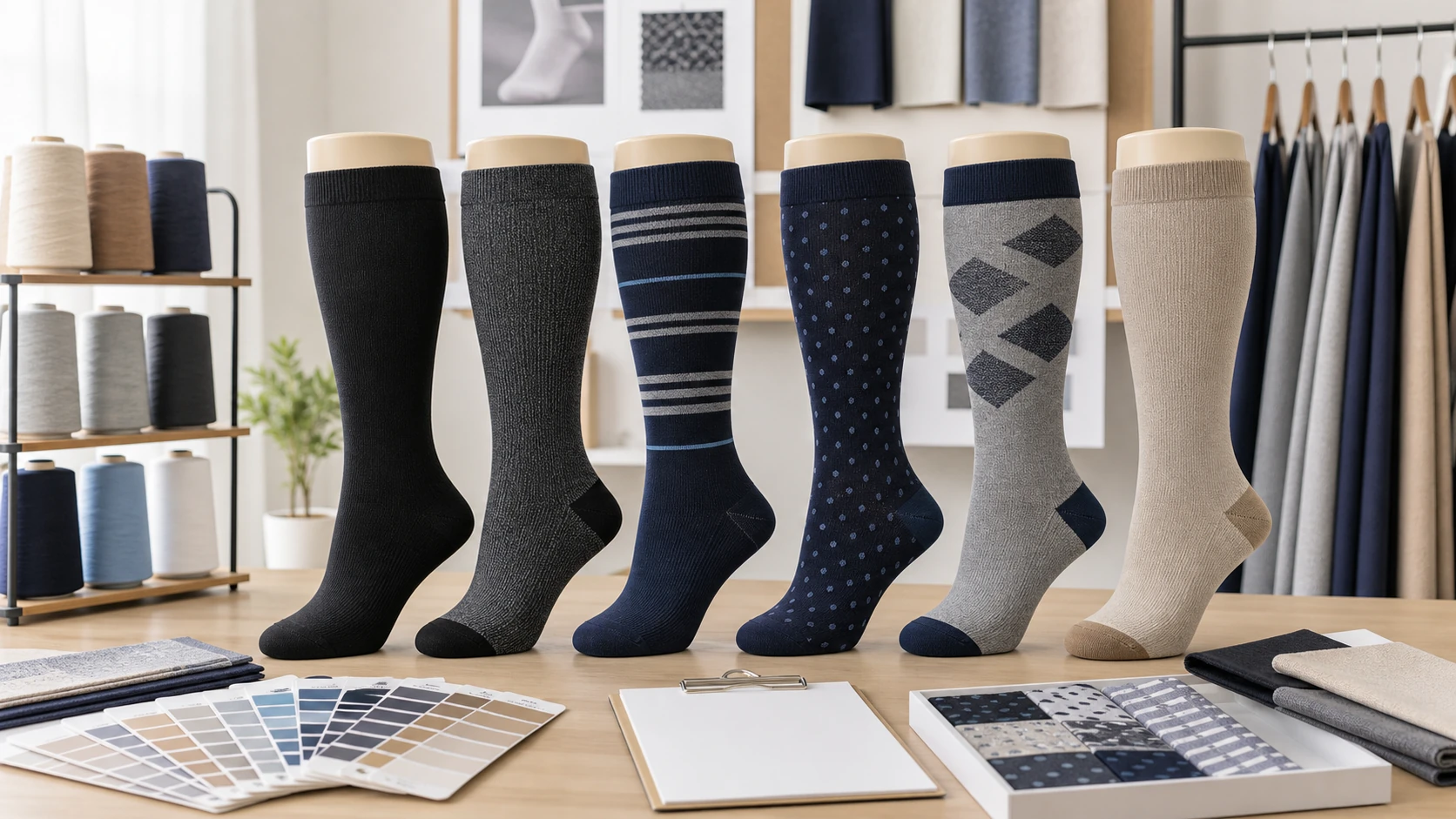
Color and pattern can make a compression sock line easier to merchandise, but every option creates an SKU, yarn decision and inventory commitment. Plus size brands also need to consider how graphics look when stretched across a wide calf.
A useful assortment combines dependable core colors with controlled seasonal or channel-specific designs. The goal is variety customers can understand, not a catalog that is difficult to replenish.
What buyers should define before sampling
A complete brief gives the factory a measurable target and reduces revisions. Confirm these points before treating a sample as ready for approval:
- Core permanent colors.
- Seasonal or channel-specific accent colors.
- Pattern scale and repeat.
- Logo visibility and placement.
- MOQ per color or pattern.
- Size-color inventory matrix.
Build the core before the capsule
Black, navy, beige, white and gray often provide the base for daily, workwear and travel products. Select the shades that match the target channel instead of carrying every neutral.
Add a limited capsule of stripes, dots or geometric patterns to test demand. Keep the same fit specification so color results can be compared fairly.
Approve patterns under stretch
A motif can become wider, lighter or misaligned when the sock is worn. Place key elements away from high-distortion areas and check the pattern on several calf sizes.
Horizontal stripes and small repeats need particular attention. The factory should provide a worn or stretched reference, not only a flat sock photo.
Control color across materials and packaging
Yarn, printed labels, boxes and screen images use different color systems. Approve physical yarn or product references and use digital values only as supporting guidance.
Record acceptable shade variation and review dark and light lots under consistent lighting. Product names should remain stable across listings and labels.
Sample approval checklist
Use the approved sample as a production reference, not only a sales photo. Record the results of the following checks and retain the final version:
- Approve physical color references.
- Stretch patterns on small and large calf samples.
- Check logo and motif placement.
- Compare packaging color with the actual sock.
- Review MOQ and size ratio for each option.
- Photograph colors under consistent neutral light.
OEM and commercial planning
Use sales roles for each color: core replenishment, seasonal attention, occupational use or value-pack variety. Remove options that duplicate one another and protect stock in the core shades. A disciplined matrix gives distributors more confidence than a large range with uncertain availability.
Buyers can compare related styles in Our Products, review private label compression socks capability and share their target sizes, quantities and packaging through the contact form.
Common mistakes to avoid
- Approving patterns only on flat socks.
- Launching too many colors in a low-MOQ order.
- Expecting screens to provide exact color approval.
- Using different color names across channels.
- Leaving core colors out of stock while seasonal shades remain.
Final recommendation
Give every color and pattern a job in the assortment. Validate appearance under stretch and build inventory around proven core demand.
Specifications and claims should be confirmed for the product, sales channel and destination market before ordering or publishing customer-facing materials.
FAQ
Which colors should a plus size line start with?
Choose a focused set of neutral core colors that match the channel, then add a small pattern or seasonal capsule.
Why test patterns on wide calves?
Stretch can change scale, spacing, opacity and alignment, so a flat image does not show the final appearance.
Can packaging use the same color code as yarn?
Color codes can guide communication, but physical references are still needed because materials reproduce color differently.
How can brands limit SKU complexity?
Reduce duplicate shades, use a clear size ratio and add new patterns only after reviewing sales data.