
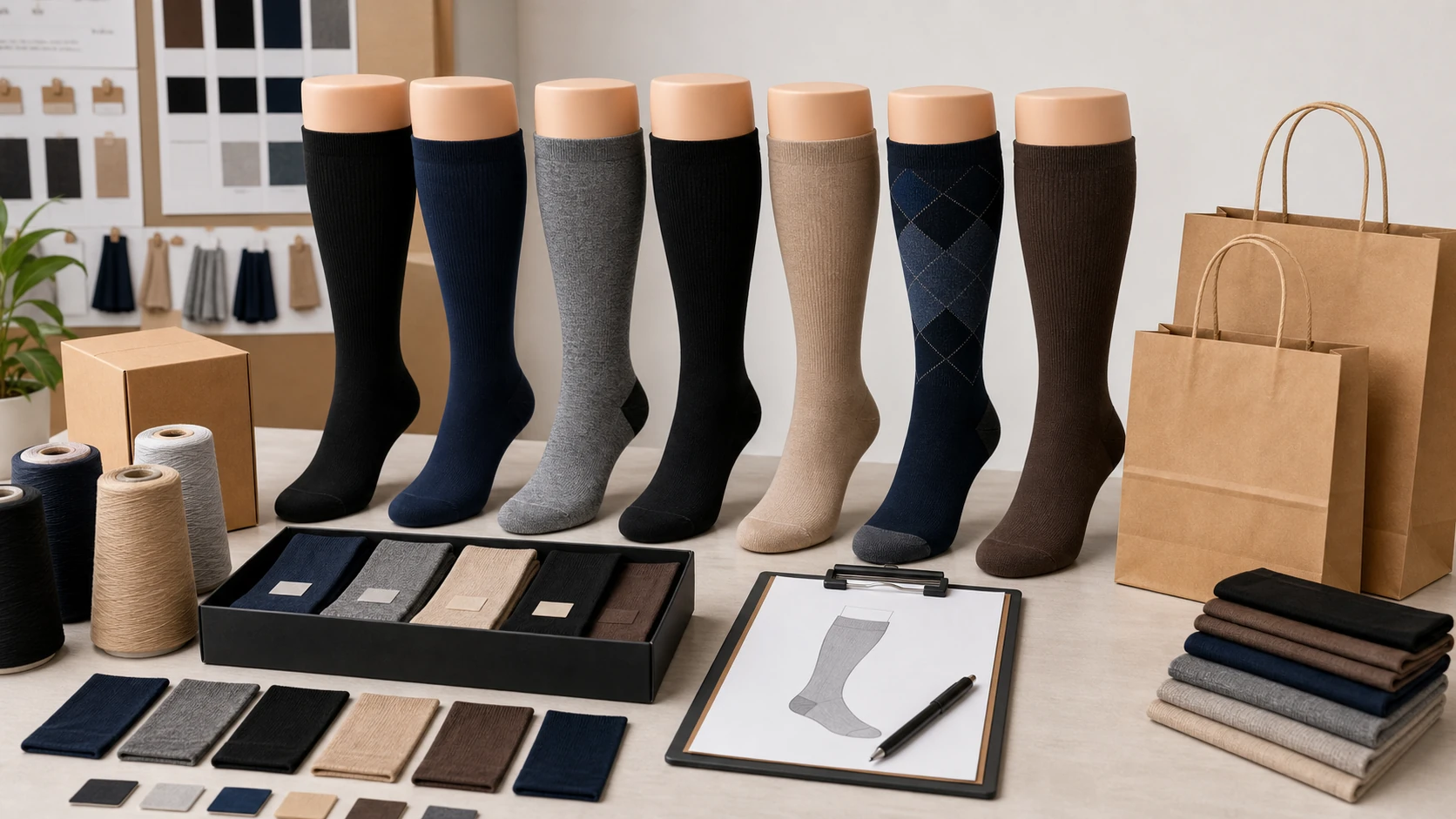
OEM customization can include far more than a logo. For plus size compression socks, the most valuable custom work often begins with calf grading, cuff construction and compression performance before moving to colors and packaging.
Buyers should separate functional customization from visual customization. This makes sampling easier and protects the features that matter most to the end customer.
What buyers should define before sampling
A complete brief gives the factory a measurable target and reduces revisions. Confirm these points before treating a sample as ready for approval:
- Target ankle, calf, foot and leg-length ranges.
- Compression specification and intended use.
- Yarn composition, weight and hand feel.
- Toe, heel, cuff, zipper or open-toe construction.
- Colors, patterns and logo method.
- Packaging, labels, barcodes and carton marks.
Start with fit and construction
A custom color on a standard pattern does not create a true plus size product. Define the body ranges and inspect how the pattern changes across sizes.
Functional options may include extra-wide cuffs, open toes, zippers, reinforced heels, smoother toe seams and different leg lengths. Each option changes the sample plan.
Choose materials for the product position
Nylon blends can support smooth performance-focused styles, while bamboo-derived or cotton-containing blends may support a softer comfort story. Athletic or summer concepts may use different ventilation and moisture-management structures.
Ask for exact composition and sample evidence. A marketing fiber name should not replace durability, recovery and compression checks.
Plan visual customization efficiently
Solid core colors are usually easier to launch than many patterns. Logos can be knitted, printed, applied to packaging or combined depending on visibility and MOQ.
Create a controlled color palette and approve physical references. Screen colors are not reliable enough for final bulk matching.
Sample approval checklist
Use the approved sample as a production reference, not only a sales photo. Record the results of the following checks and retain the final version:
- Approve functional fit before decorative details.
- Compare material options under the same size specification.
- Review logo clarity at actual sock scale.
- Check pattern distortion on wide calves.
- Confirm color references and tolerances.
- Test final packaging with the folded product.
OEM and commercial planning
Prioritize customization that supports a clear selling proposition. A first private label order may use custom sizing, two core colors and branded packaging, then add patterns after demand is proven. Every extra combination increases MOQ, inventory and inspection complexity.
Buyers can compare related styles in Our Products, review private label compression socks capability and share their target sizes, quantities and packaging through the contact form.
Common mistakes to avoid
- Starting with artwork before fit is defined.
- Adding too many colors and sizes to a small first order.
- Using fiber names without confirming composition.
- Approving a pattern only on a flat sample.
- Ignoring packaging MOQ.
Final recommendation
Build OEM customization in layers: fit, performance, material, visual design and packaging. This sequence creates a differentiated product with a manageable approval process.
Specifications and claims should be confirmed for the product, sales channel and destination market before ordering or publishing customer-facing materials.
FAQ
What can be customized in plus size compression socks?
Sizing, compression, material, cuff, toe style, zipper, color, pattern, logo, labels and packaging can be customized subject to feasibility and MOQ.
Which customization should come first?
Start with body ranges, construction and performance because they determine whether the product fits its intended customer.
Can a custom pattern stretch differently on wide calves?
Yes. Pattern scale and alignment should be checked on the target calf range.
Does every custom option increase MOQ?
Not always, but new yarns, colors, tooling, packaging and complex constructions can create additional minimums or setup costs.