
Direct answer
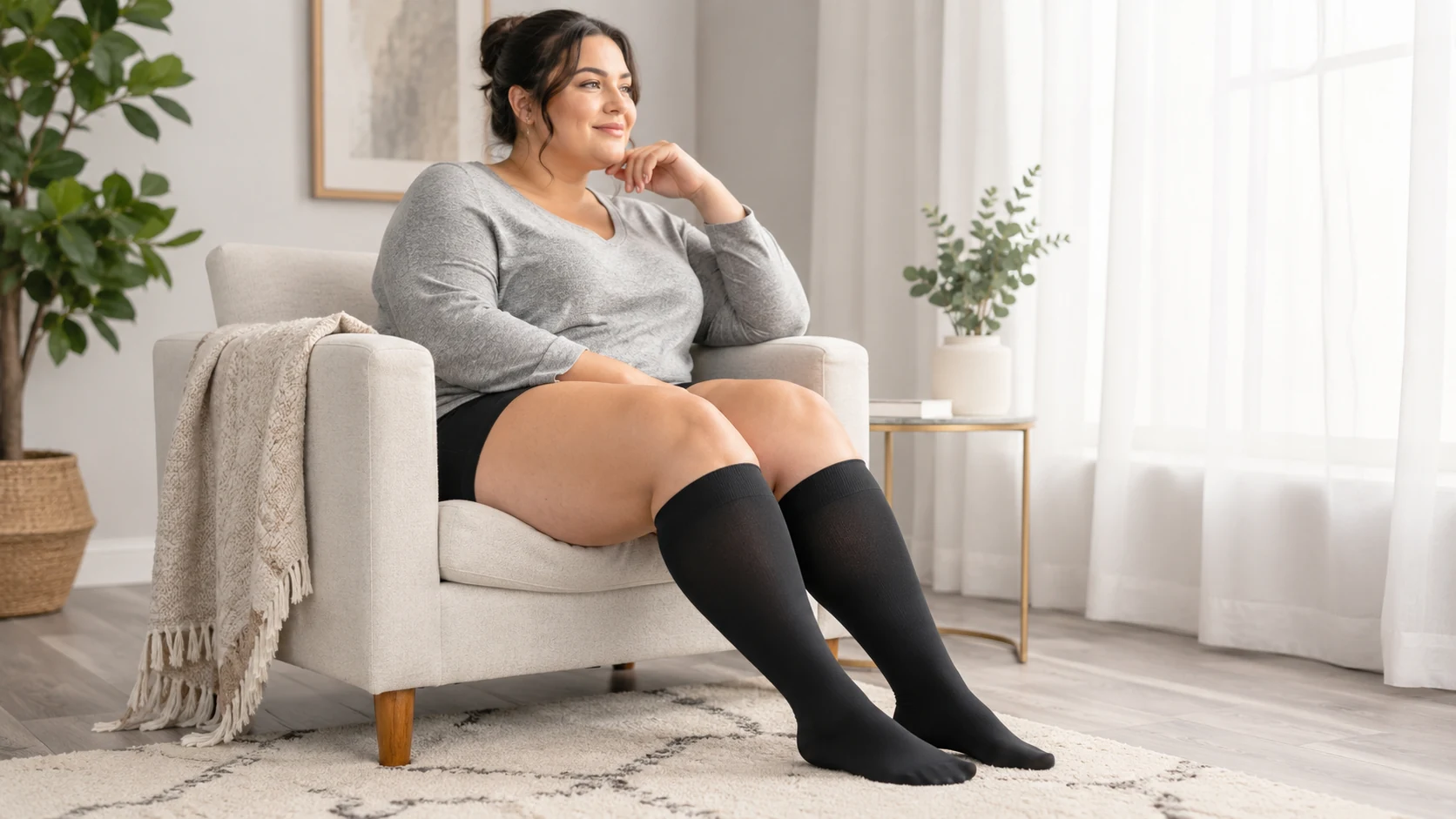
The best compression socks for large calves are purpose-built wide calf or extra wide styles with a published calf range, balanced ankle fit, comfortable cuff, suitable leg length and dependable stretch recovery. The word "best" depends on the wearer and channel: a travel buyer, nurse retailer and pharmacy distributor may need different materials, compression levels and packaging even when they target a similar calf circumference.
| Feature | Why it matters for large calves | B2B sample check |
|---|---|---|
| Published calf range | Lets customers choose by body measurement instead of an inconsistent XL label. | Test the smallest and largest circumference in every proposed size. |
| Balanced ankle fit | Prevents extra calf room from creating wrinkles or instability lower on the leg. | Check the ankle while standing, sitting and walking. |
| Comfort cuff | Helps the sock stay up without making the top band the tightest point. | Review roll-down, pressure marks and recovery after washing. |
| Correct leg length | Keeps the knee-high cuff below the bend of the knee. | Confirm heel position and cuff height on representative wearers. |
Start with measurements, not an XL label
Size names are inconsistent across brands. A customer who wears 2XL in one product may fall outside another brand's calf range. Product pages and packages should therefore show foot or shoe size, ankle circumference, calf circumference and heel-to-knee length. The chart should state whether measurements are body measurements and where the calf is measured.
For B2B development, use actual market data from returns, customer service and competitor reviews. If many customers fit the foot but not the calf, a wide calf extension may be enough. If the foot, ankle and leg length also need more room, build a complete plus size compression sock range.
A comfortable cuff must also stay in place
A soft or wide cuff is not automatically non-binding. Cuff circumference, elastic strength, band width, knit structure and body-to-cuff transition work together. If the cuff is too rigid, it can leave deep marks or fold. If it is too weak, the sock may slide or roll down.
Wear testing should check the cuff while standing, sitting and walking. Large-calf testers should match both the lower and upper ends of the size range because a band that works at one circumference may perform differently at another. Silicone grip dots can be evaluated for selected products, but they are not a substitute for correct sizing.
Balance ankle fit and calf room
One common failure is adding calf width without controlling the ankle. Excess fabric around the ankle can wrinkle, while an ankle that remains too narrow can make donning difficult. The grading plan should define how the circumference changes from ankle to calf and how that affects the intended support profile.
Heel position and leg length also matter. A heel pocket that sits too high or low can shift the entire sock, and excess length can collect below the knee. Review the size grading guide when preparing sample measurements.
Choose compression level for the product purpose
Larger calves do not automatically need stronger compression. The target pressure should match the product positioning, wearer guidance and applicable market requirements. Light daily support, travel products and firmer programs may use different specifications even when the size chart is similar.
Ask how the manufacturer checks compression across sizes. A result from one standard size should not be assumed to represent an extra wide size. Claims on packaging should match the finished product and avoid unsupported medical language.
Material and construction choices
Nylon-spandex constructions are common for durability, smooth appearance and controlled recovery. Bamboo blends can support a softer comfort story, and lighter wicking constructions may suit summer or travel channels. Thickness should be considered together with shoe fit and donning difficulty.
Toe seam, heel reinforcement and knit density should be consistent across the range. An open toe can suit customers who prefer toe freedom or warm-weather wear, while a closed toe gives full-foot coverage. Zipper styles may support easier-on positioning, but the zipper guard, slider, seam and pressure distribution require careful wear testing.
Best assortment by B2B channel
Pharmacy and medical-supply ranges often benefit from neutral colors, simple size communication and restrained claims. Nurse and uniform retailers may add patterns after core black, navy and skin-tone options. Travel sellers can consider lightweight construction and two- or three-pair packs, while online private label brands need especially clear measurement graphics to reduce returns.
A smaller launch with proven sizes and colors is usually easier to replenish than a broad assortment with thin demand per SKU. Keep the same fit standard across solid, patterned and multipack versions so customers can reorder confidently.
Sample tests before choosing a product
- Measure ankle, calf, cuff and leg length against the specification.
- Test donning and removal on representative large calves.
- Wear the sock while standing, sitting and walking.
- Check slipping, roll-down, wrinkles and pressure marks.
- Wash repeatedly and compare shrinkage and stretch recovery.
- Confirm toe seam, heel position, color and package size.
Document results for each size rather than approving only one sample. Our wide calf sample checklist can organize the review.
OEM references
For sourcing, compare wide calf compression socks, extra wide compression socks, nurse compression socks and custom compression socks. Send the target measurements, compression level, material, packaging and quantity in the first inquiry.
FAQ
Are wide calf compression socks only for plus size users?
No. Calf circumference is not determined by clothing size alone. Athletes, workers, travelers and other customers may need a wider calf even when standard foot sizing works for them.
Should socks for large calves use stronger compression?
Not automatically. Compression level should match the product purpose and relevant market requirements. Fit and sizing must be solved before pressure claims are made.
What calf circumference counts as extra wide?
There is no single global definition. Brands should publish their own tested range in centimeters and inches. For this website, extra wide programs can be developed around approximately 55-70 cm depending on the full size specification.