
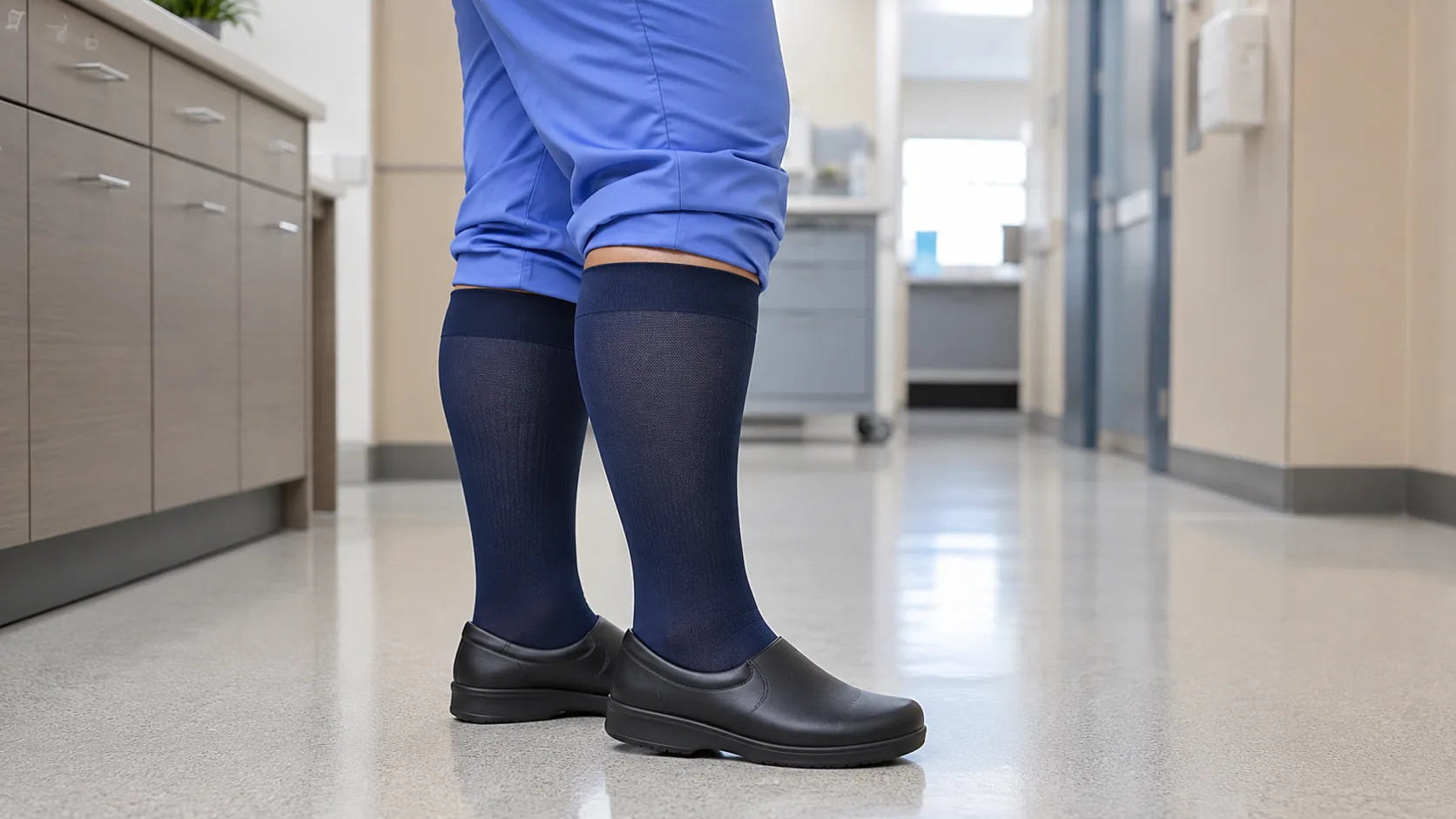
Nurses and medical staff are one of the strongest user groups for plus size compression socks. Long shifts, frequent standing and constant walking make comfort and fit especially important. For B2B buyers, nurse compression socks should not be treated as a simple fashion SKU. The product must balance wide calf fit, support, durability and professional appearance.
Private label sellers, uniform brands and medical supply distributors should review several details before placing an OEM order.
Wide calf fit comes first
Many standard compression socks are too tight at the calf for plus size wearers. This can lead to discomfort, marks on the leg, roll-down and difficult donning. For nurse compression socks, the size chart should include ankle and calf circumference, not only shoe size.
A practical product line can include wide calf and extra wide calf options. Buyers may also prepare different length options, such as knee-high, open toe or over-knee styles, depending on the market.
Cuff comfort matters during long shifts
The cuff must hold the sock in place without digging into the leg. Nurses often wear compression socks for many hours, so a tight top band can quickly become a problem. During sample review, check whether the cuff leaves deep marks, rolls down when walking, or feels too loose after stretching.
For plus size nurse compression socks, cuff design is often as important as the main compression area. A soft but stable top band can improve comfort and reduce product complaints.
Choose materials for comfort and durability
Nurse socks need breathable, durable and washable materials. Common OEM options include nylon, polyester, spandex and soft blended yarns. For certain buyer programs, bamboo blend or other comfort-focused materials may be considered, but claims should be described carefully and supported when needed.
Buyers should ask for sample feedback after washing. Colorfastness, stretch recovery and shape stability are important for repeat use.
Plan professional color and pattern options
For medical and uniform channels, black, navy, white, beige and simple patterns are often practical. Some private label sellers also develop colorful patterns for retail or online marketplaces. The key is to match the buyer's channel.
A uniform distributor may prefer clean solid colors. An Amazon seller may want multi-pack patterns. A medical supply buyer may need packaging that looks professional and easy to understand.
Avoid unsupported medical claims
Compression socks are often connected with leg support and long standing comfort, but buyers should be careful with medical claims. Labeling rules can vary by market. Before printing packaging or product pages, confirm which pressure level, test data and compliance language are required.
For B2B sourcing, it is safer to describe product structure, intended support level, size range, materials and OEM options clearly.
OEM details to send your supplier
When requesting a sample, send your supplier the target wearer and sales channel, calf circumference range, compression level target, sock length and toe style, material preference, color direction, logo requirements, packaging requirements and estimated quantity.
Clear information helps the factory prepare samples that match the buyer's market instead of guessing from a general product photo.
Final sample review
Before confirming mass production, review the sample on real fit, cuff comfort, stretch recovery, pressure feel, washing behavior, color, logo position and packaging. For plus size nurse compression socks, a small change in calf range or cuff construction can make a large difference.
The best B2B nurse compression socks are not only larger. They are designed around long-shift comfort, wide calf fit and repeatable OEM quality.